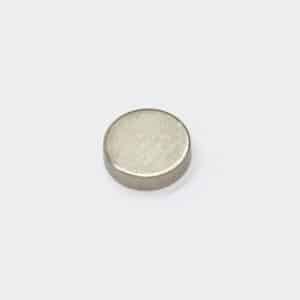
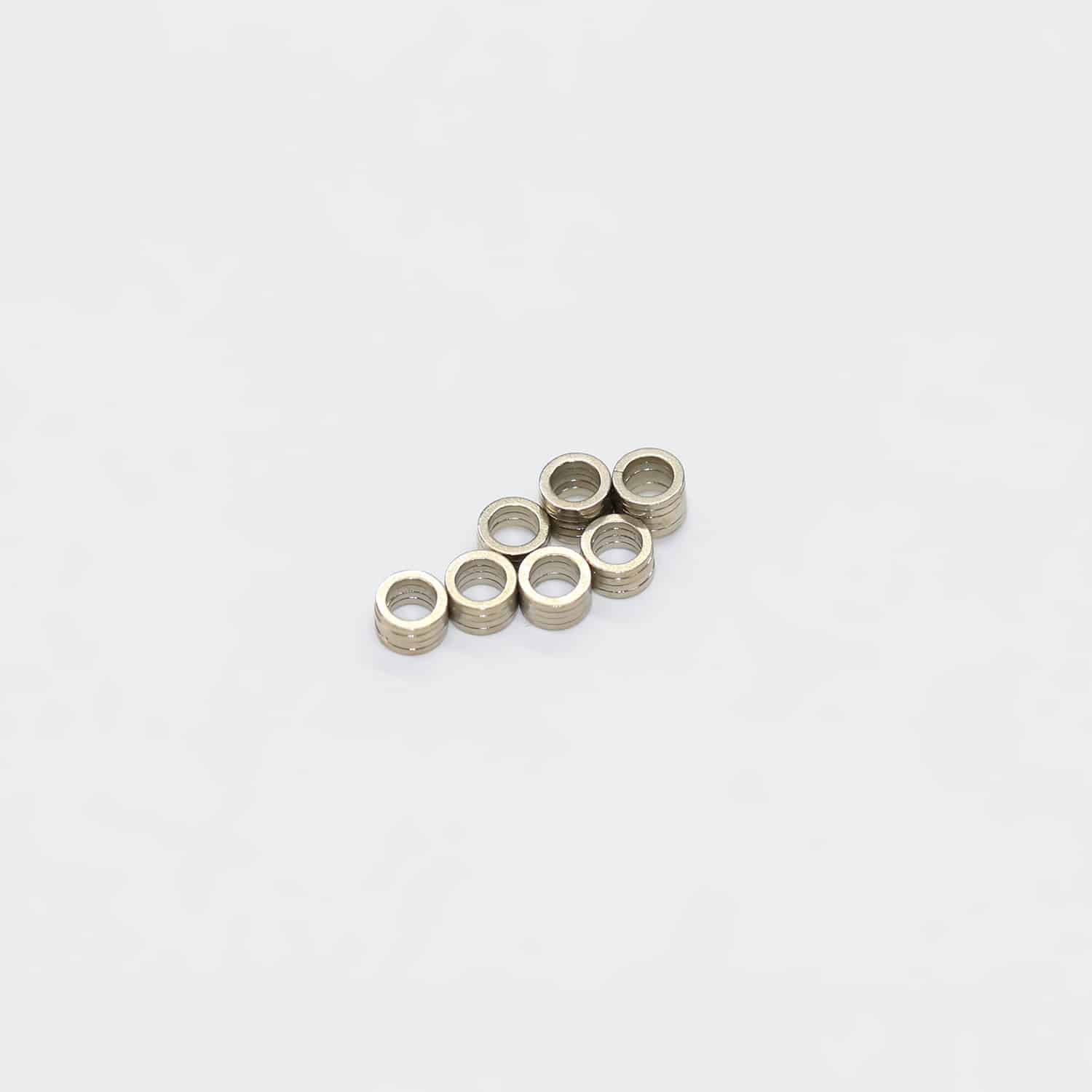
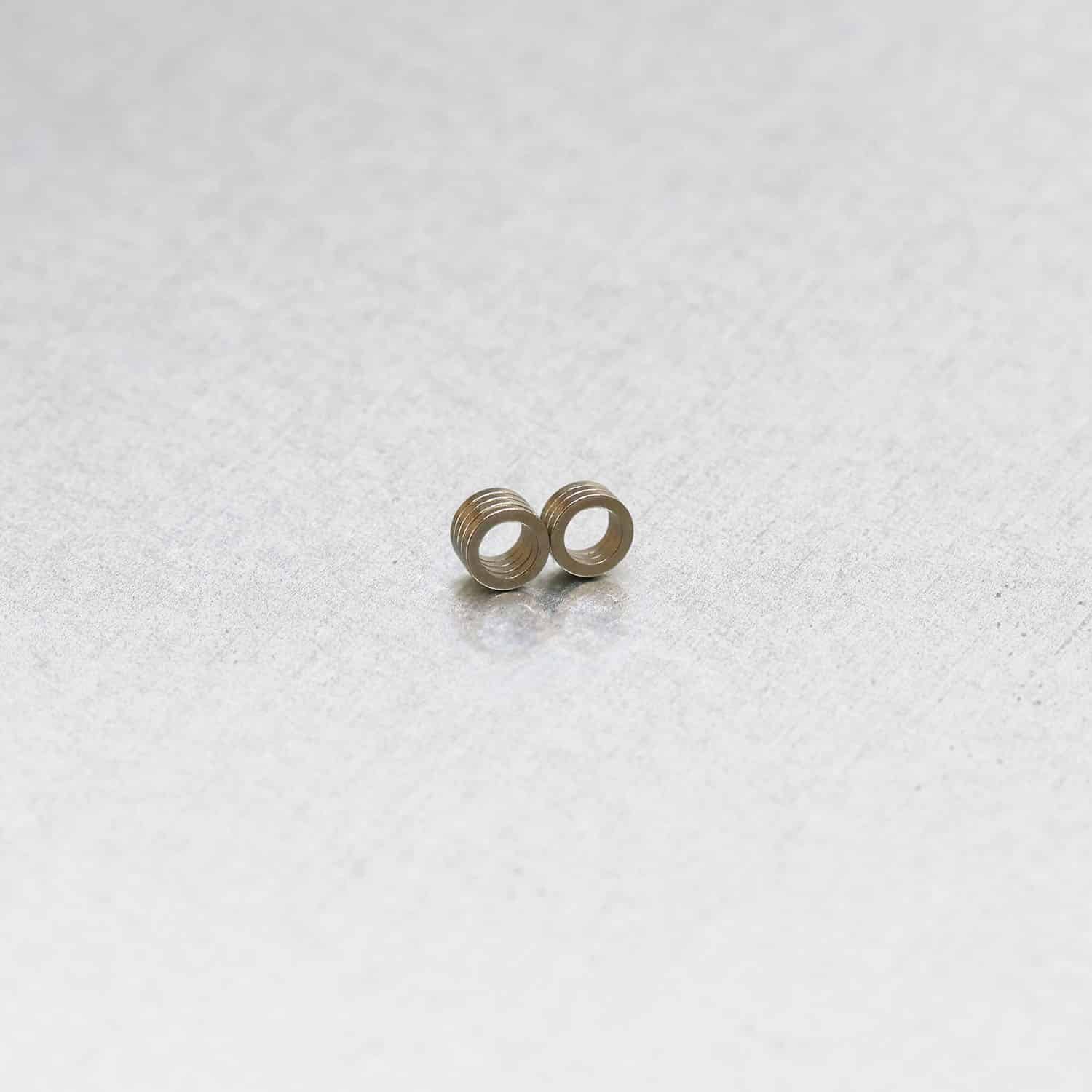
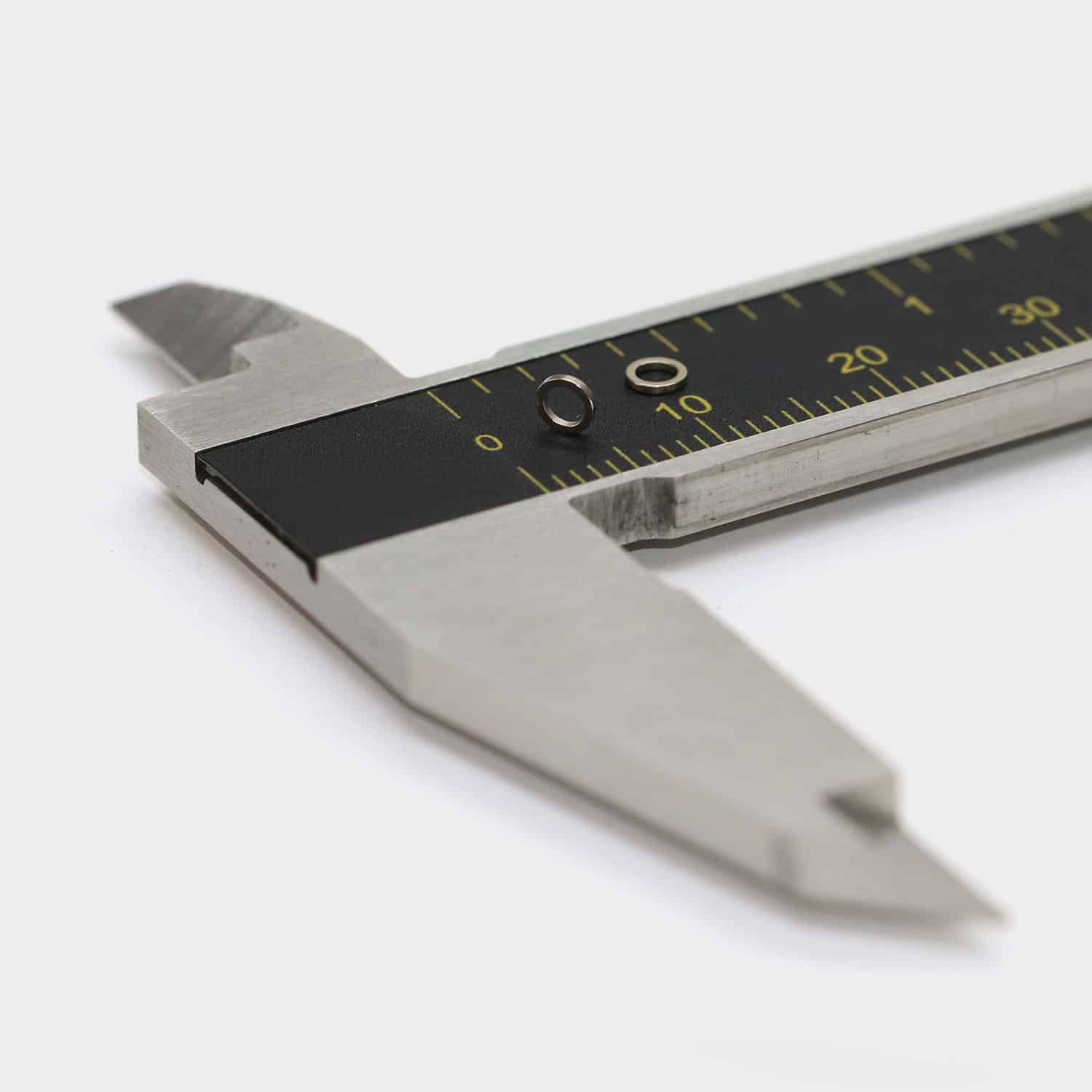
We supply miniature Neodymium ring magnets in Grade N45.
Excellent magnetic strength with better machining tolerance than higher grades.
Ideal for precision instrumentation, micro-motors, and optical assemblies.
These magnets require precise concentricity (the hole must be perfectly centered).
We manufacture to tight tolerances whether you need a “bead” shape (height greater than diameter) or a flat washer profile.
Your components will fit exactly as specified.
Why Grade N45? (The Performance Choice)
For tiny magnets where volume is limited, standard N35 often lacks the necessary pull force.
The N45 Advantage:
– N45 offers approximately 20-30% more holding power than N35
– Allowe you to downsize your component without sacrificing performance.
Stability:
– Unlike the extreme N52 grade, N45 offers a slightly better thermal safety margin.
– Plus cost-efficiency for high-volume production runs.
Critical Engineering Focus: Concentricity & Fit
A ring magnet with an off-center hole creates vibration in motors.
1. Concentricity (TIR):
For rotating applications (like micro-rotors), the Inner Diameter (ID) must be perfectly centered within the Outer Diameter (OD).
Our Standard:
We monitor Total Indicator Runout (TIR) to ensure the magnet does not “wobble” on the shaft.
2. The “Shaft Fit” Tolerance:
How does the magnet fit onto your pin/shaft?
Loose Fit (Slip fit): We hold the ID to a positive tolerance (e.g., +0.05mm / -0) to ensure it slides on easily for gluing.
Tight Fit: We hold the ID to a precision tolerance (e.g., +0.02mm) for precise alignment.
Warning:
– Do not press-fit tiny Neodymium rings.
– They will crack.
– Always design for a slip-fit with adhesive.
Surface Coating: The “ID Coverage” Challenge
Plating the inside of a tiny hole is difficult.
Bubbles or lack of plating will cause corrosion.
We use barrel-plating methods to ensure the Inner Diameter is fully protected:
Nickel (Ni-Cu-Ni): The standard.
Note:
– Nickel has a thickness of ~15-20 microns.
– Please account for this “coating buildup” when calculating your shaft clearance.
Parylene C:
Recommended for rings with IDs smaller than 2mm.
Parylene is a vapor coating that coats the inside of the tube perfectly without clogging the hole or creating ridges.
Gold (Au):
For electrical contact rings.
Magnetization Directions
Axial:
Magnetized through the length (Flat faces are Poles).
Application: Levitation, magnetic bearings, stacking on a rod.
Diametric:
Magnetized across the diameter (Curved sides are Poles).
Application: The standard for micro-motor rotors and Hall effect speed sensors.
Radial:
– True radial magnetization is rarely possible for rings under 10mm OD.
– We recommend Diametric as the functional alternative.
Handling & Assembly Advice
Tiny rings are difficult (tricky) to separate.
Tube Packaging:
We supply these rings stacked in rigid plastic tubes.
This is essential for:
– Safety: Prevents the rings from slamming together and shattering.
– Assembly: Allows you to dispense them directly onto a shaft without handling them with tweezers.
Polarity Marking:
For Axial rings, we can mark the North face with a colored dot (on rings >3mm OD) to assist with consistent assembly.
Applications
Haptics: Vibration motors in smartphones.
Medical: Endoscope control rings.
Consumer Tech: Magnetic charging connectors (beads).
Fiber Optics: Faraday rotators and isolators.
Ordering Guide
To ensure the ring fits your shaft, please specify:
– Dimensions: OD x ID x Height.
– Clearance: “What is the diameter of the shaft this magnet must fit onto?” (We can then estimate the safe ID dimension for you).
– Magnetization: Axial or Diametric?
– Coating: Do you need Parylene (for tight ID tolerance) or Standard Nickel?