
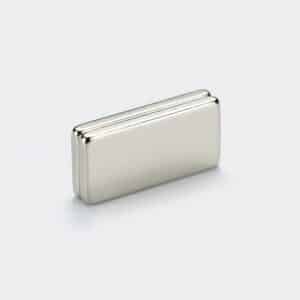
Rated to 200°C (392°F), Extra High Coercivity, The Alternative to SmCo
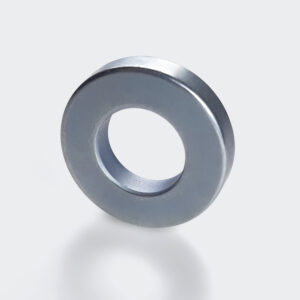
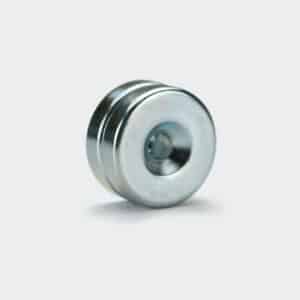
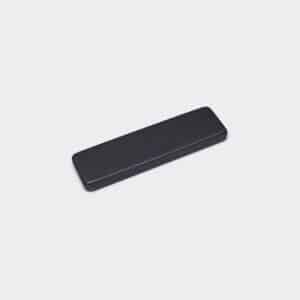
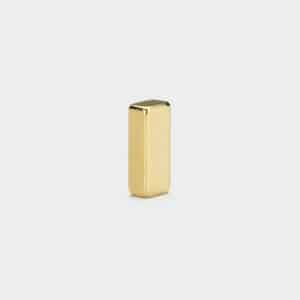
We offer Custom EH (Extra High) Series Neodymium Magnets.
They are your pick for applications that require magnets to work reliably in heat up to 200°C.
This series represents the upper tier of heat resistance for Neodymium.
It fills the critical gap between standard high-temp magnets (which fail at 150°C) and expensive Samarium Cobalt (SmCo).
If your application runs hot.
Examples can be an EV traction motor, a downhole pump, or a high-speed turbine.
The EH Series allows you to maintain the high magnetic power of Neodymium without risking demagnetization.
Why Choose EH Grade?
EH Grade allows you to stay with Neodymium in environments where you thought it was impossible.
1. Stronger & Cheaper than Samarium Cobalt:
The Problem:
When temperatures hit 200°C, many engineers switch to SmCo magnets.
But SmCo is brittle (it cracks easily) and expensive.
The EH Solution:
EH-Grade Neodymium is mechanically stronger than SmCo and less prone to chipping.
It also offers higher magnetic flux (power) than comparable SmCo grades.
This makes it the superior choice if your temperature stays under 200°C.
2. Resistance to Demagnetization:
The Science:
“EH” stands for Extra High Coercivity.
This measures the magnet’s ability to resist internal failure.
The Benefit:
In high-stress applications (like a motor fighting high torque), standard magnets can “give up” and lose power.
EH magnets are “magnetically hard”.
They lock their magnetic field in place even under stress and heat.
Available Grades (EH Series)
We can cut EH material to your exact specifications.
Note that as heat resistance goes up, raw magnetic strength is slightly lower than standard N52.
30EH: The standard entry point for 200°C protection.
33EH / 35EH: The most common grades for industrial sensors and motors.
38EH: High performance. Excellent for high-torque applications.
42EH: Premium grade. Delivers exceptional power density while surviving 200°C.
Coating Advisory: 200°C Limits
At 200°C, the magnet survives, but many coatings do not.
Phosphating (Passivation):
Highly Recommended.
It is a chemical surface treatment that cannot peel off.
It is ideal for magnets glued onto steel rotors or submerged in oil.
Nickel (Ni-Cu-Ni):
Can withstand 200°C, but discoloration may occur over time.
Warning (No Epoxy):
Standard Epoxy coatings often degrade or soften around 180°C.
We do not recommend Epoxy for EH magnets running at full temperature.
Ideal Applications
Electric Vehicle (EV) Motors: Traction motors that generate significant internal heat.
Magnetic Couplings: Pumps moving hot fluids where the magnet must transmit torque through a barrier.
Turbo Machinery: High-speed sensors and actuators.
Downhole Tools: Shallow oil & gas drilling sensors.
Ordering Guide
To get a quote, please verify the thermal environment:
1). Dimensions: Length x Width x Thickness (or Block/Disc/Arc shape).
2). Grade: e.g., “35EH” or “38EH”.
3). Max Temp: “Does your device actually hit 200°C?” (If it goes higher, you must switch to SmCo).
4). Adhesive: “How are you attaching this?” (Standard superglue fails at 100°C. You will need high-temp epoxy).