
24k Gold Finish, Superior Conductivity, Biomedical Compatibility
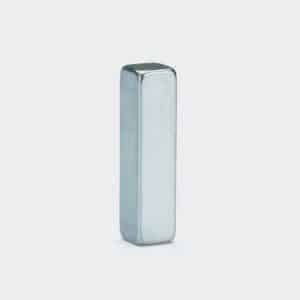
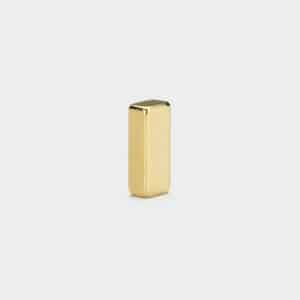
We supply Custom Neodymium Blocks finished with a quad-layer Gold Plating (Ni-Cu-Ni-Au).
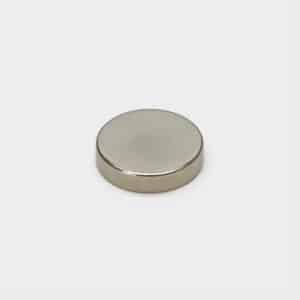
Standard Nickel magnets are functional, but they are electrically resistive and can cause skin irritation (nickel allergy).
For these reasons, Gold Plated blocks offer a solution for high-value applications.
Gold Plating provides the optimum balance of Low Contact Resistance, Corrosion Protection, and Premium Aesthetics.
It is a good when you design a magnetic charging connector, a medical wearable, or luxury packaging.
Why Pay for Gold?
Gold is expensive. Engineers specify it for three technical reasons:
1. Electrical Conductivity (The “Smart” Connector):
The Application:
Magnetic Pogo-Pins or Battery Chargers.
The Logic:
Standard Nickel oxide allows electricity to pass, but with higher resistance.
Gold is a noble metal; it does not form an oxide layer.
The Benefit:
A Gold Plated magnet ensures a reliable, low-resistance electrical connection every time it snaps shut.
It is the industry standard for transmitting data or power through a magnetic latch.
2. Biomedical & Hypoallergenic:
The Application:
Wearables (Smartwatches, Hearing Aids).
The Logic:
Roughly 10-15% of the population has a Nickel allergy.
Direct skin contact with a standard magnet causes a rash.
The Benefit:
Gold is biocompatible and hypoallergenic.
Encapsulating the magnet in Gold allows it to touch the skin safely without irritation.
3. Solderability:
The Application:
PCB Mounting.
The Logic:
Gold wets easily with solder.
You can reflow or solder a gold plated magnet directly onto a circuit board.
The Gold plating ensures a robust mechanical and electrical joint.
Manufacturing Specs: The “Layer Cake”
Our Gold Plating is not a simple dip.
It is a structured barrier.
The Quad-Layer Process:
To ensure durability, we do not plate Gold directly onto the magnet. We use a 4-stage process:
– Base Nickel: Adhesion to the Neodymium.
– Copper: Leveling and corrosion resistance.
– Second Nickel: Structural hardness.
– Top Gold (24k): The functional outer layer (0.05 – 0.1 microns).
Standard Thickness: Total coating ~15-20 microns.
Appearance: Bright Yellow Gold (Jewelry Grade).
Durability Advisory: Softness
Gold is a soft metal. It behaves differently than Nickel.
The “Sliding” Risk:
The Issue:
Gold has low hardness.
If you use a Gold magnet in a sliding latch, it will constantly rubs against steel.
The thin Gold layer will wear off, revealing the Nickel underneath.
Recommendation:
Gold magnets are best for Compression contacts (Snap-On / Snap-Off).
Avoid high-friction sliding applications.
Ideal Applications
Smart Connectors: Magnetic charging ports on consumer electronics.
Medical Wearables: Glucose monitors and hearing aid battery doors.
Luxury Packaging: Closures for high-end jewelry or perfume boxes.
Sensors: Contacts in corrosive environments (Gold does not tarnish).
Ordering Guide: Specifying the Finish
To quote these accurately, please define:
1). Dimensions: Length x Width x Thickness.
2). Function:
– Conductive: “Is this passing electrical current?” (We prioritize plating thickness).
– Decorative: “Is this for a luxury box?” (We prioritize cosmetic perfection).
3). Grade: N35, N42, N52?
4). Quantity: (Gold pricing fluctuates; larger batches lock in better rates).