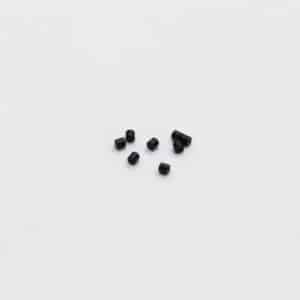
OD down to 1.0mm, Inner Bore, N52 High-Density Energy
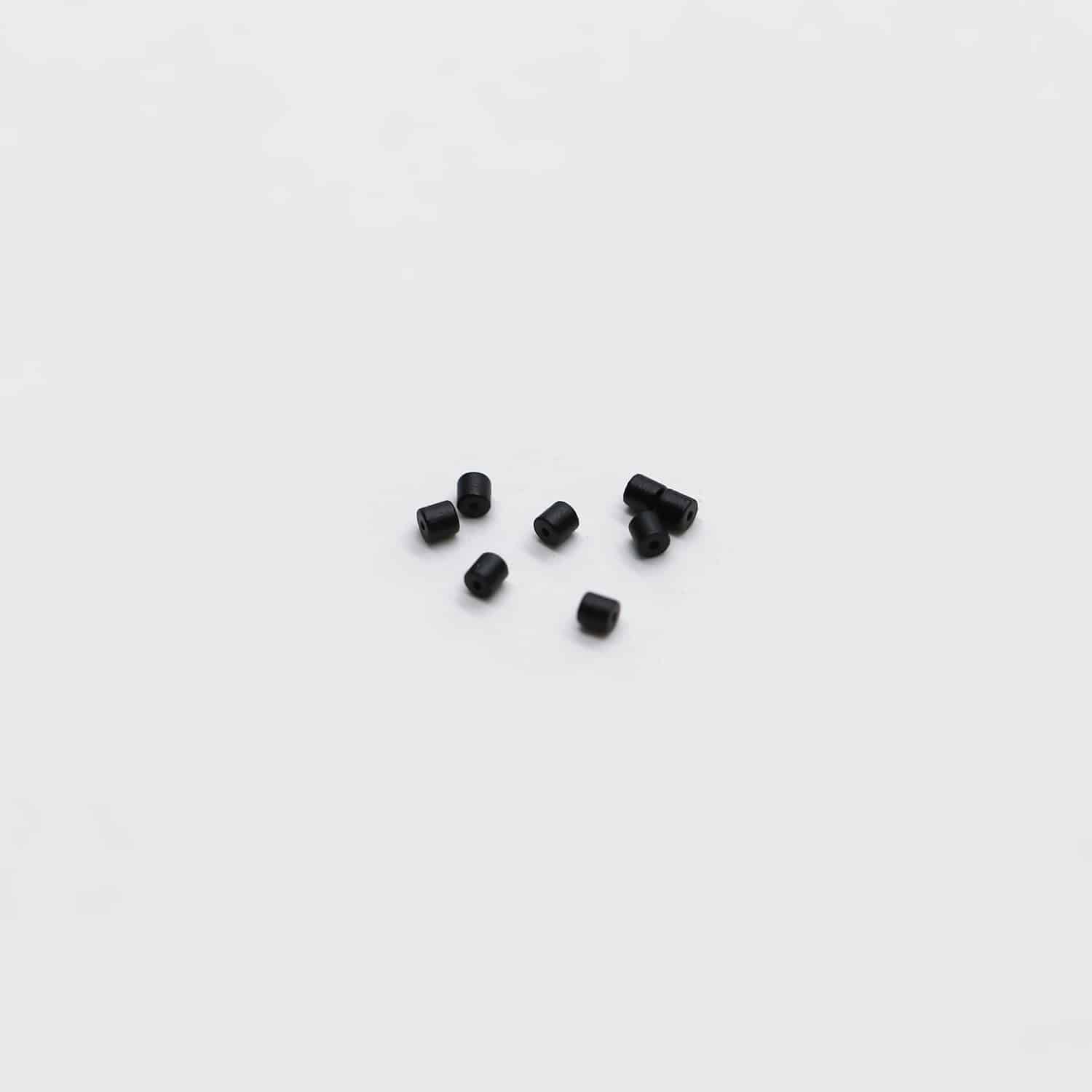
We supply precision Hollow Micro-Cylinders (Micro-Rings).
These Neodymium cylinders come with an Outer Diameter (OD) as small as 1.0mm.
And feature a precision drilled through-hole.
These components are critical for ultra-miniature assemblies.
For such magnetic assemblies, the magnet must slide over a shaft, a fiber optic wire, or a guide pin.
Because the volume is reduced by the central hole, we use Grade N52.
We can say it’s strongest available magnetic material.
It maximizes the flux density and ensures functional holding force despite the minimal mass.
Why a Hollow Micro-Cylinder?
These are specialized components used when a solid cylinder simply won’t work.
1. Shaft Integration (The “Slip-Fit”):
The Application:
– Micro-motors or linear actuators in medical devices.
The Function:
– The magnet needs to ride along a needle or guide wire.
– Our micro-rings allow for concentric rotation or linear movement along a central axis.
2. Optical Alignments:
The Application:
– Fiber optic isolators or laser collimators.
The Function:
– The central hole allows light or a fiber strand to pass through the center of the magnetic field.
– It creates a Faraday Rotator effect or precise beam alignment.
3. Wire EDM Precision:
The Method:
You cannot mechanically drill a 1mm magnet; it would shatter.
We use Wire Electrical Discharge Machining (EDM) to create the inner bore without mechanical stress.
This ensures the wall thickness remains uniform and concentric.
Critical Design Advisory: Wall Thickness
Physics sets the limit on how “hollow” we can make these.
The “0.2mm Wall” Rule:
For a magnet with an Outer Diameter (OD) of 1.0mm, the structural integrity depends on the Wall Thickness ( (OD – ID) / 2 ).
Safe Limit: We recommend a minimum wall thickness of 0.25mm – 0.3mm.
Example: If OD = 1.0mm, the Inner Diameter (ID) should ideally be ≤ 0.4mm.
The Risk:
– If you request a 1.0mm OD with a 0.8mm ID (0.1mm wall), the magnet becomes as fragile as eggshell.
– It will likely crumble during plating or assembly.
Handling & Assembly
Needle Insertion:
When sliding these onto a shaft, ensure the shaft is non-magnetic or use a fixture.
The magnet will want to jump sideways.
The “Crush” Hazard:
– Do not use metal pliers.
– These micro-rings must be handled with vacuum tweezers or non-magnetic plastic tweezers.
– A 1mm hollow ring has almost zero hoop strength and will crush under finger pressure.
Ideal Applications
Medical Catheters: Steering magnets threaded onto guide wires.
Endoscopy: Micro-actuators inside camera heads.
Fiber Optics: Micro-isolators and circulators.
Micro-Robotics: Joint actuators in insect-scale robots.
Ordering Guide: Precision Dimensions
To manufacture this part, we need precise numbers.
Please provide:
1). Dimensions: OD x ID x Length.
2). Magnetization Direction:
– Axial: (Poles on the flat ring faces). Most common.
– Diametric: (Poles on the curved sides). Used for micro-motor rotors.
3). Hole Tolerance: “Does the shaft diameter have a tight tolerance?” (e.g., “Must fit over a 0.4mm wire”).
4). Quantity: (Due to EDM setup time, these are typically produced in batches of 500+).