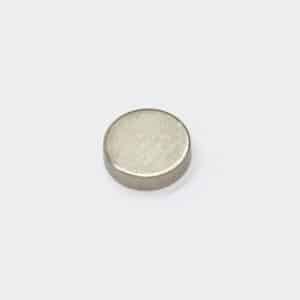
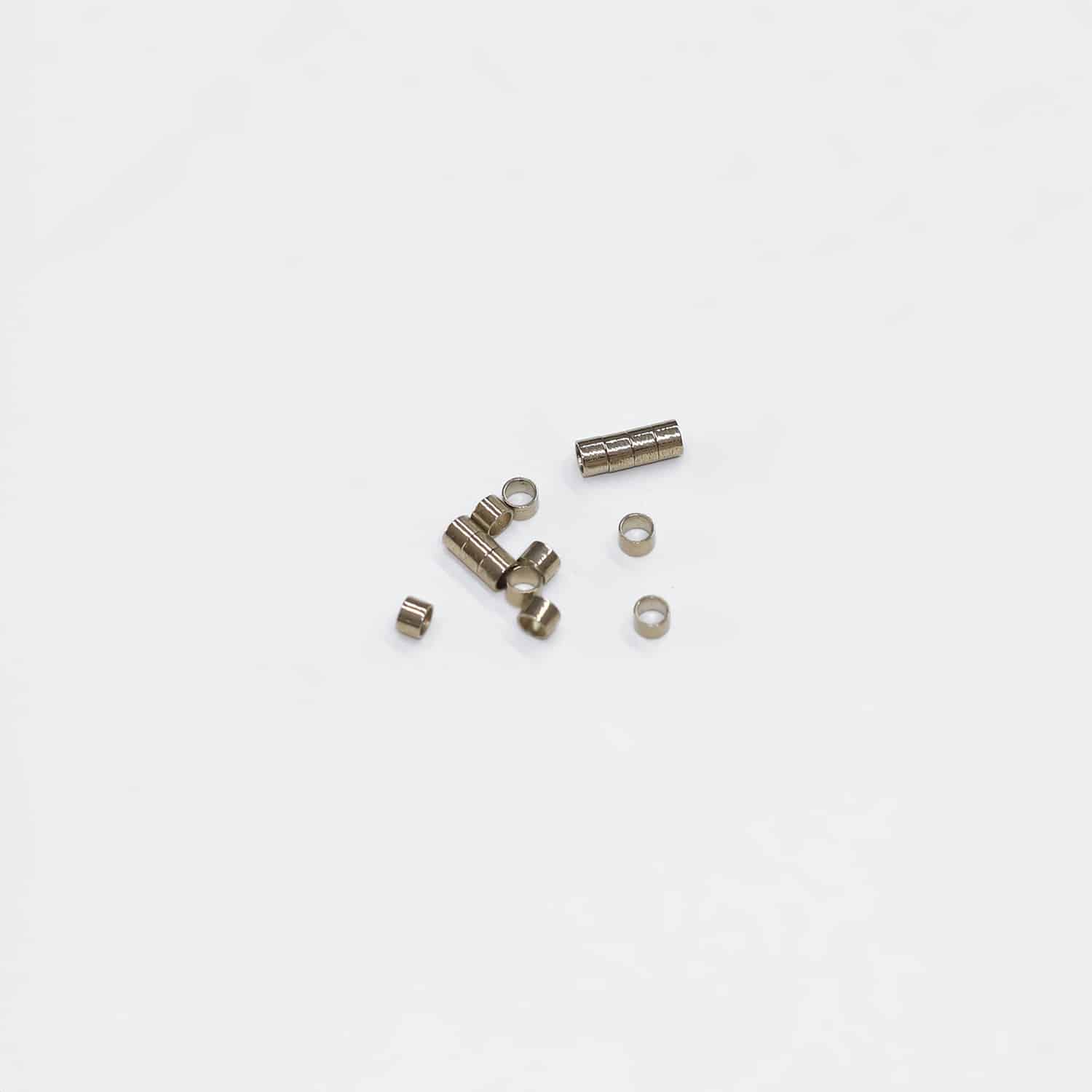
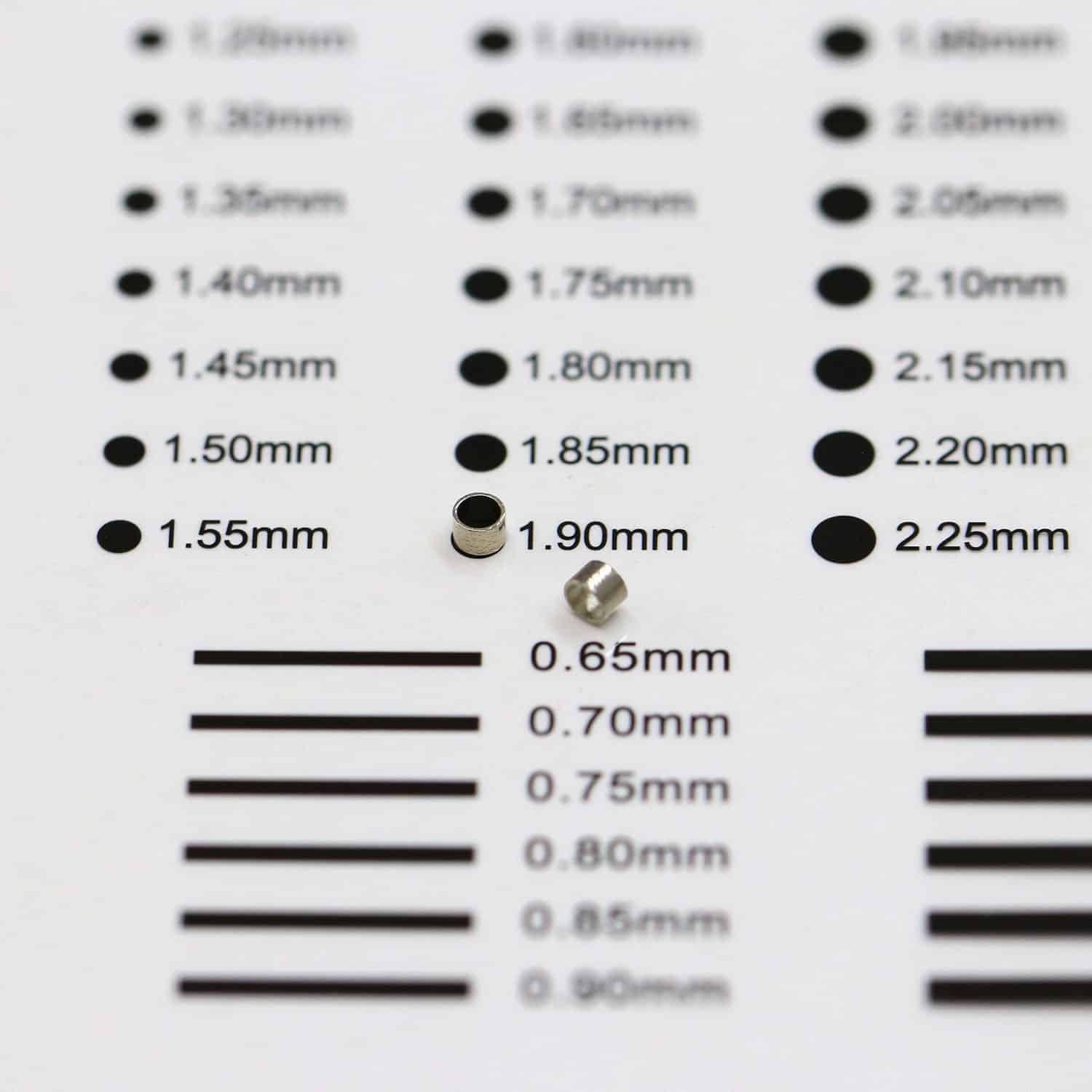
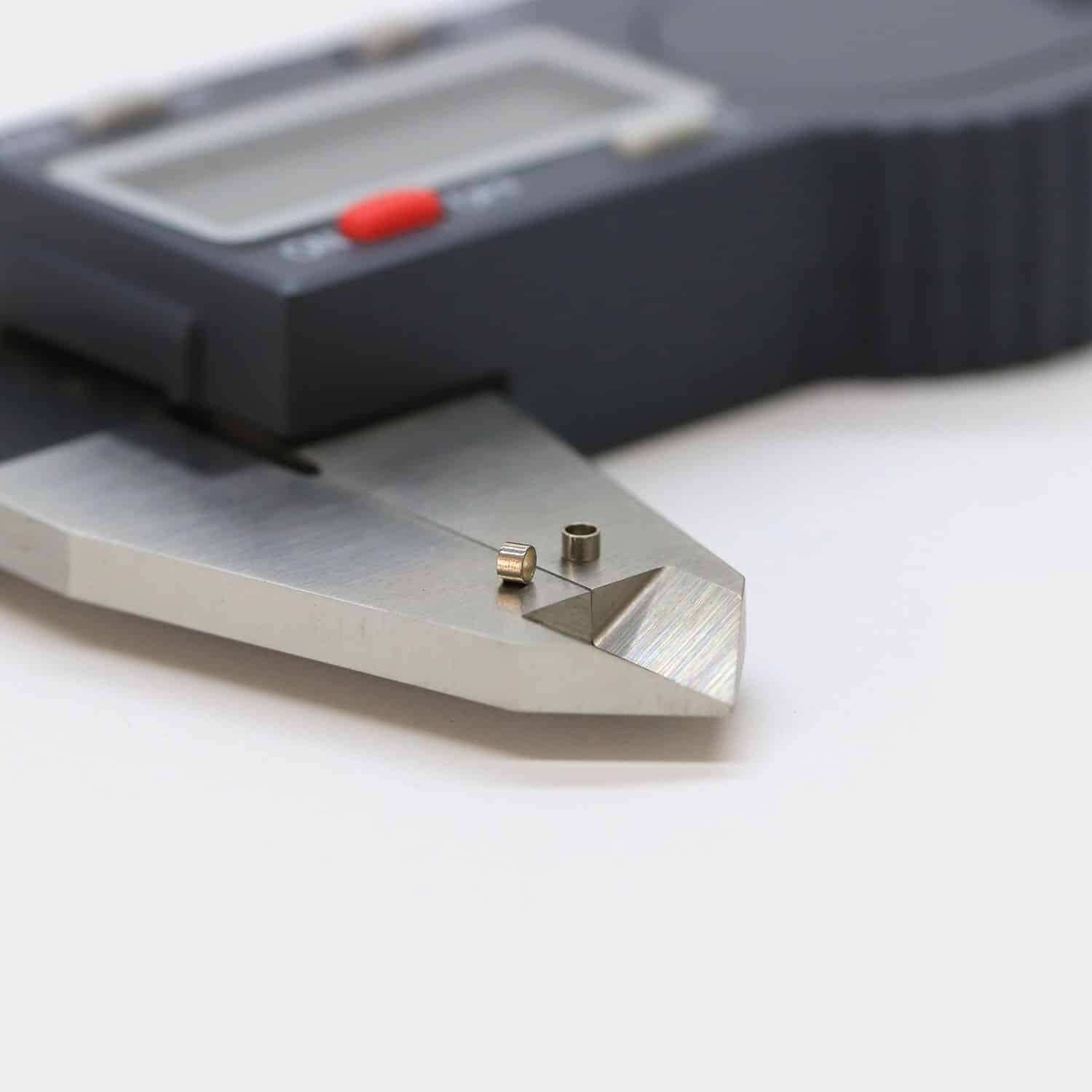
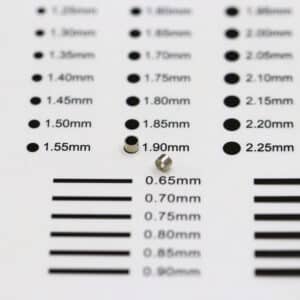
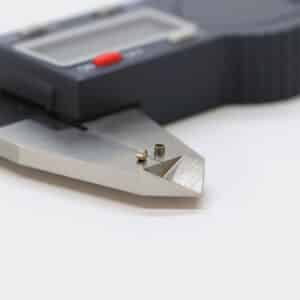
We supply Neodymium tube magnets (also called ring magnets, micro-rings, or magnetic washers).
They are designed for miniaturized assemblies where space is critical.
These components are essential for precision instrumentation, optical devices, and micro-robotics.
The center hole reduces magnetic volume, which means standard grades often lack sufficient pull force.
That’s why we specialize in N52—the highest grade available.
N52 compensates for the lost material, giving you maximum performance in the smallest footprint.
The “Wall Thickness” Challenge
Fragility Warning:
The “Wall Thickness” (Outer Diameter minus Inner Diameter divided by 2) is the critical factor for these magnets.
The Risk:
– Tiny tubes with a wall thickness of less than 1.0mm are extremely brittle.
– They function like ceramic glass.
Assembly Advice:
– We strongly recommend bonding (gluing) these magnets into place.
– Do not press-fit tiny N52 tubes, as the radial pressure will almost certainly crack the ring.
Design Tip:
– If your design allows, try to maintain a wall thickness of at least 0.5mm – 0.8mm for structural stability.
Technical Specifications & Capabilities
Material Grade:
– N52 (Recommended) for maximum strength.
– High-Temp (UH/EH) available for micro-motors.
Outer Diameter (OD) Min: 1.5mm
Inner Diameter (ID) Min: 0.8mm (Dependent on OD).
Length/Thickness (T): Min: 0.5mm (Shallow/Washer style).
Tolerances (Standard): ±0.05mm.
Precision ID/OD: ±0.005mm (Crucial for shaft fitting).
Concentricity:
– We ensure the ID is perfectly centered within the OD to prevent “wobble” in rotating applications.
Surface Coating & The “Inner Hole” Issue
Plating the inside of a tiny tube is chemically difficult (the “Faraday Cage” effect).
Standard plating often misses the inner center.
We use specialized barrel-plating techniques to ensure coverage:
Parylene (Best Choice):
Since Parylene is applied as a vapor gas, it penetrates deep into tiny ID holes where liquid Nickel cannot reach.
Result: A perfectly uniform, waterproof coating with no buildup on the edges.
Gold (Au):
Used for electrical conductivity or aesthetic requirements in luxury goods (e.g., watchmaking).
Nickel (Ni-Cu-Ni):
Note:
Nickel plating builds up on the edges of the hole (dog-bone effect).
If your tolerance is tight (e.g., fitting over a pin), please consult us first.
Magnetization Direction
Since these are “Shallow Body” (Washer type) magnets, the orientation dictates the function:
Axial (Standard):
– Magnetized through the thickness (Flat faces are N/S).
– Use: Clamping, lid closures, magnetic fasteners.
Diametric:
– Magnetized across the diameter.
– Use: Micro-motor rotors, Hall effect sensor triggers.
Radial:
– True radial magnetization is generally not available for magnets smaller than 10mm OD.
– This is because of physical tooling limits.
– We recommend using Diametric pairs as a substitute.
Packaging & Logistics
Tiny rings are difficult to handle and prone to chipping if they snap together.
Plastic Tube Packing:
– We stack the rings in rigid plastic tubes (like a roll of coins).
– This prevents them from snapping together and shattering.
Vacuum Tray:
– Recommended for high-speed automated assembly lines.
Handling:
– We recommend using non-magnetic tweezers (plastic or ceramic).
– Using steel tweezers will cause the magnet to snap to the tool, risking breakage.
Applications
Micro-Optics: Actuators for camera autofocus lens modules.
Horology (Watchmaking): Magnetic clasps or movement components.
Medical: Endoscope tips and catheter guidance.
Electronics: Miniature speakers and haptic feedback motors.
Ordering Guide: Critical Dimensions
To quote accurately, we need the “3 Dimensions” plus the coating requirement:
– OD: Outer Diameter.
– ID: Inner Diameter.
– T: Thickness (Length).
Coating:
Parylene is highly recommended for tubes with ID < 2mm.