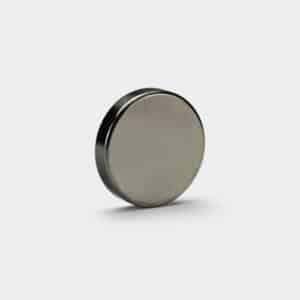
Dark Metallic Finish, Conductive Surface
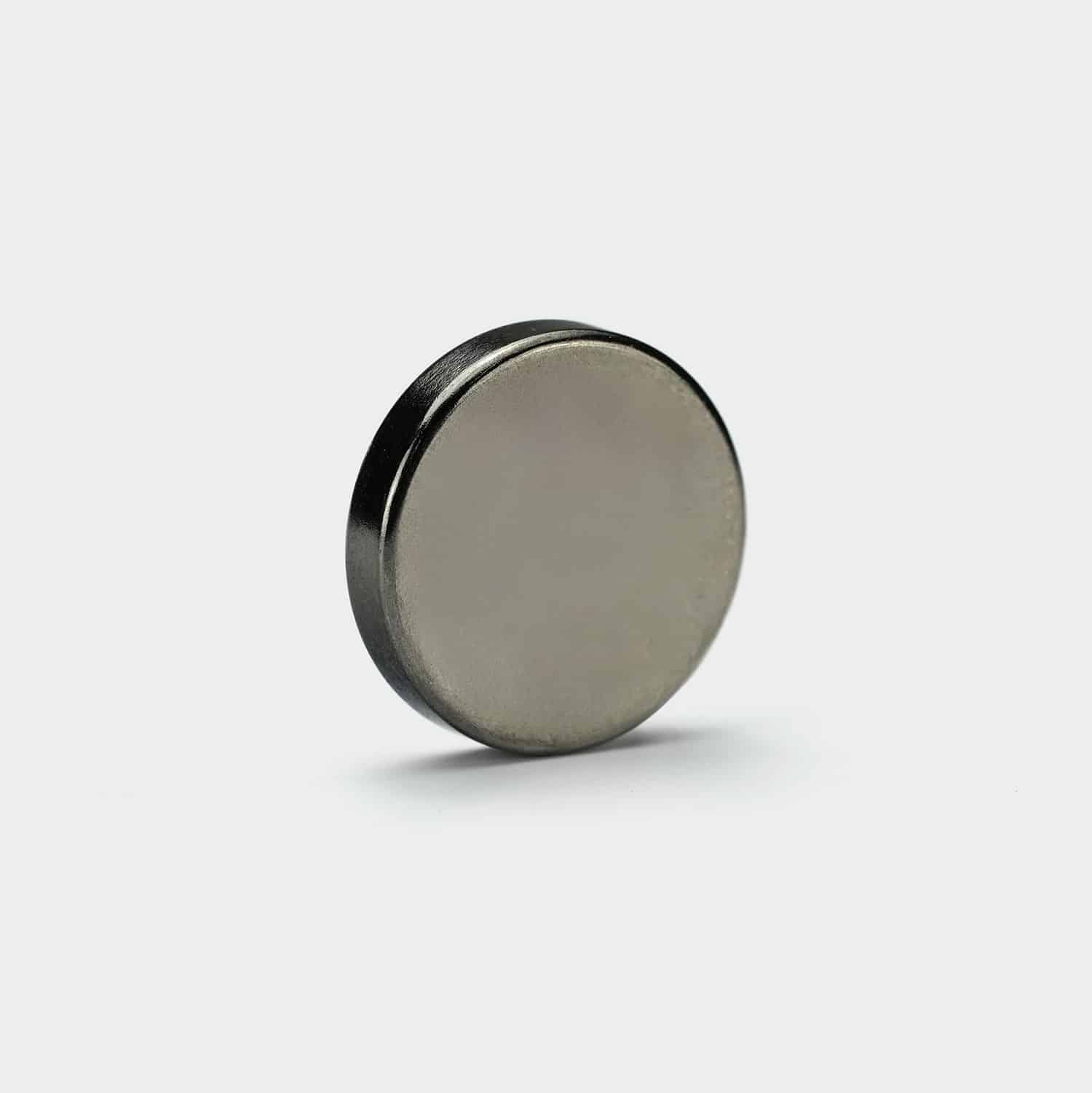
We supply Custom Neodymium Magnets finished with a premium Black Nickel plating.
Standard silver magnets can be visually distracting.
Meanwhile. Black Nickel offers a sleek, Dark Charcoal / Gunmetal finish.
It blends seamlessly into dark electronic housings, displays, and tactical equipment.
This is a Metallic Plating, not a paint.
It retains a reflective luster similar to black chrome or hematite jewelry.
This is the preferred choice for industrial designers who need a magnet that looks sophisticated and high-tech, rather than industrial.
Black Nickel vs. Black Epoxy
This is the most common technical question we answer.
Here is how to choose:
1. Dimensional Precision (Thickness):
The Problem:
Black Epoxy is a thick coating (20-30 microns).
It can ruin tight interference fits.
The Black Nickel Advantage:
Black Nickel is a standard electro-plating process (approx. 10-15 microns).
It allows for much tighter tolerances (±0.05mm) than Epoxy.
This makes it ideal for precision assemblies where every micron counts.
2. Electrical Conductivity:
The Problem:
Epoxy is an insulator.
You cannot pass current through it.
The Black Nickel Advantage:
Because it is a metal plating, Black Nickel is electrically conductive.
It can be used as a ground path or a contact point in modular electronics.
3. The Visual Difference:
Black Nickel:
Shiny, reflective, “Tech-Luxury” look.
Black Epoxy:
Matte, flat black, “Rubber/Plastic” look.
Manufacturing Specs: The “Triple-Stack”
To achieve this finish, we use a robust triple-layer process.
The Plating Structure (Ni-Cu-BlackNi):
1). Base Nickel: Provides adhesion to the Neodymium core.
2). Copper Layer: Acts as a leveling agent and corrosion barrier.
3). Top Black Nickel: The final decorative layer that provides the dark tone.
Color Note:
Please be aware that “Black Nickel” is technically a Dark Grey / Anthracite.
It is not “Jet Black” like printer ink.
Under direct light, it has a metallic sheen.
Durability Advisory: Decorative vs. Functional
Black Nickel is beautiful, but it requires specific handling.
1. Wear Resistance:
The Warning:
The black top-coat is a cosmetic layer.
If this magnet is used in a Sliding Latch, it constantly rubs against steel.
The black layer will eventually wear off, revealing the silver/copper color underneath.
Recommendation:
Black Nickel is best for Compression Closures (Snap-On/Snap-Off).
Or static holding, not high-friction sliding.
2. Fingerprints:
The Advice:
Due to the glossy dark finish, fingerprints show up easily during assembly.
For high-end cosmetic parts (Face A), we recommend assembly workers wear gloves.
Ideal Applications
Consumer Electronics: Dark-themed laptops, VR headsets, and gaming peripherals.
Tactical Gear: Equipment where bright silver reflections are unwanted.
Retail Displays: Magnetic shelving or signage where the hardware must “disappear.”
Luxury Packaging: High-end box closures where a plastic epoxy look is not acceptable.
Ordering Guide: Specifying the Finish
To ensure you get the right “Black” magnet, please specify:
1). Dimensions: Shape and Size.
2). Finish Confirmation: “Do you need the Shiny Metallic look (Black Nickel) or the Matte Plastic look (Epoxy)?”
3). Face Requirement: “Is this a cosmetic part?”
– We can perform additional visual sorting to ensure the top face is free of minor plating flow marks.
4). Application: “Is this a sliding latch?”
– If yes, we might suggest a different solution to prevent wear.