
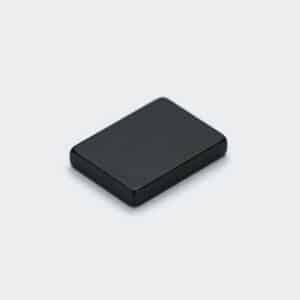
200+ Hour Salt Spray Rating, Superior Glue Adhesion, Non-Reflective Finish
Standard Nickel (Ni-Cu-Ni) plating is sufficient for indoor office environments.
But it fails quickly when exposed to moisture, salt air, or outdoor condensation.
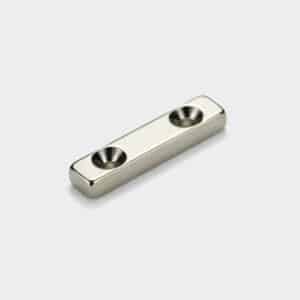
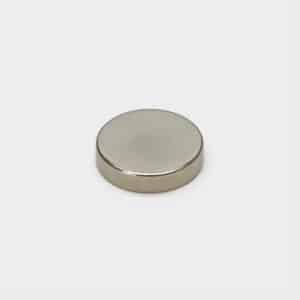
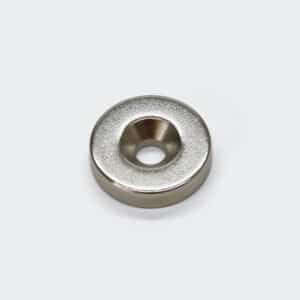
We supply Custom Neodymium Plates coated in premium Black Epoxy.
This electro-deposition coating acts as a hermetic plastic barrier.
Seal the magnet against oxidation.
It is the industry standard choice for:
– Marine electronics, outdoor sensors.
– And any application where the magnet must be glued into a housing or hidden against a dark background.
Why Choose Epoxy?
It is not just about the black color.
It is about chemistry.
1. The “Salt Spray” Champion:
The Problem:
Standard Nickel plating oxidizes (rusts) after 24–48 hours in a Salt Spray Test.
The Epoxy Solution:
Our Black Epoxy coating can withstand 200 – 500+ hours of continuous salt spray exposure without corroding.
If your product is used near the ocean or in high humidity, this coating is what you should consider.
2. The “Glue” Factor (Adhesion):
The Problem:
Nickel plating is extremely smooth and slippery.
Industrial adhesives (like Loctite or 3M tape) often struggle to “bite” into it.
This leads to magnets falling out of their housing.
The Epoxy Solution:
Epoxy is resin-based.
It has a high surface energy that bonds aggressively with glues and potting compounds.
It acts as a primer, ensuring your magnet stays permanently fixed.
3. Electrical Insulation:
The Benefit:
Metallic Nickel or Gold plating is conductive.
But, Epoxy is an electrical insulator.
This is critical for magnets mounted directly onto PCBs (Printed Circuit Boards) to prevent short circuits.
Manufacturing Advisory: Thickness & Edges
Epoxy is a paint-like coating.
It adds physical bulk to the magnet.
1. Dimensional Tolerance (The “Fit”):
The Spec:
Standard Nickel plating is ~10-15 microns thick.
Black Epoxy is 20-30 microns thick.
The Advice:
If you are designing a tight slot for this magnet, you must account for this extra coating thickness.
Do not design a “Zero-Clearance” fit.
2. Edge Rounding (Chamfering):
The Physics:
Liquid epoxy pulls away from sharp corners due to surface tension (the “edge-thinning effect”).
Our Process:
We heavily tumble these plates to create a Generous Radius (Rounded Edge) before coating.
This ensures the epoxy wraps perfectly around the corners.
And prevents the coating from peeling off at the sharp points.
Durability Limitations
Epoxy is excellent against rust, but weak against scratches.
Impact Warning:
Epoxy is softer than metal.
If you use this magnet in a “Sliding Latch” or a “Snap-Fit”, the coating will scratch and eventually peel.
This is because metal hits the magnet repeatedly.
Heat Limit:
Standard Epoxy softens around 100°C – 120°C.
Do not use this coating for high-temperature motor applications (use Phosphating instead).
Ideal Applications
Marine Hardware: Latches and sensors on boats.
Outdoor Security: Gate sensors exposed to rain.
Tactical Gear: Matte black finish for non-reflective military/police equipment.
Consumer Electronics: Magnets glued inside black plastic housings (invisible integration).
Ordering Guide: Specifying the Finish
To ensure the coating performs as expected, please specify:
1). Environment: “Indoor/Dry” or “Outdoor/Marine”?
– We can adjust the coating thickness for extreme environments.
2). Cosmetic Standard: “Is this a visible surface (Face A)?”
– Epoxy can sometimes have minor fluid marks; specify if you need a pristine cosmetic finish.
3). Adhesive: “Will you be using 3M tape?”
– We can clean the surface with a plasma treatment for maximum bond strength.