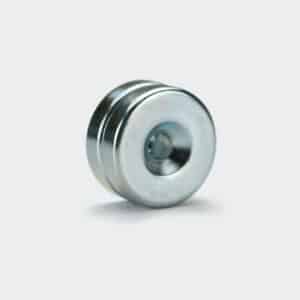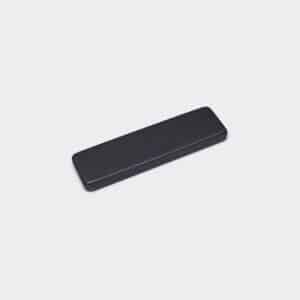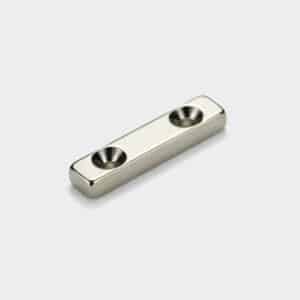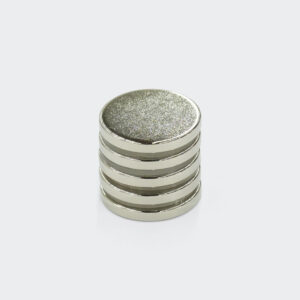


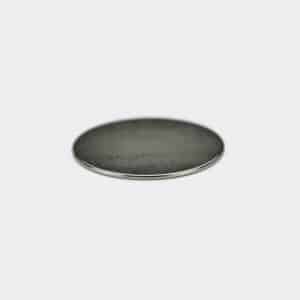
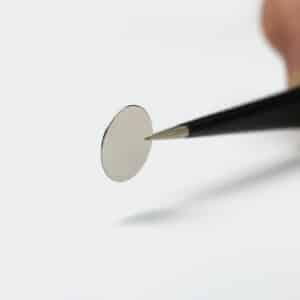
We supply the industry’s thinnest Sintered Neodymium Disc Magnets as per your requirements.
And achieve thicknesses as low as 0.20mm.
These “Micro-Discs” push the boundaries of magnetic manufacturing.
They are suitable for next-generation micro-electronics, MEMS (Micro-Electro-Mechanical Systems), and precision acoustics,
Standard magnets are usually cut with thick saw blades.
The thin disc magnets are processed using precision multi-wire slicing.
And double-sided papping.
These techniques ensure perfect flatness and parallelism at microscopic scales.
The “0.2mm” Challenge
Thickness vs. Fragility:
At 0.2mm, a sintered Neodymium magnet is extremely fragile—comparable to a ceramic wafer or glass slide.
Manufacturing Limit:
– Standard slicing stops at around 0.5mm.
– To reach 0.2mm, we must slice slightly thicker and then Lap (Grind) the material down to the final dimension.
Handling Warning:
– These magnets have zero flexibility.
– They cannot be snapped together or flexed.
– We recommend handling them with Vacuum Suction Tools or non-magnetic plastic tweezers only.
Coating Considerations: The “Thickness Budget”
On a 0.2mm magnet, the coating thickness actually matters.
Standard Plating vs. Precision Coating:
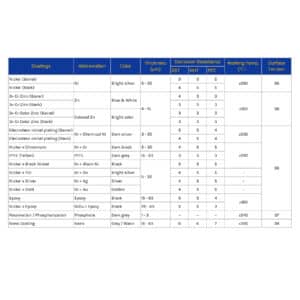
Nickel (Ni-Cu-Ni):
– A standard Nickel coating adds ~0.02mm to the total thickness (0.01mm per side).
– On a 0.2mm magnet, that means 10% of your magnet is just plating.
Parylene (Recommended):
– For 0.2mm discs, we highly recommend Parylene C (Vapor Deposition).
– It adds only 0.002mm – 0.005mm.
– And preserves the magnetic volume and maintaining tighter dimensional tolerances.
Benefit:
– Superior waterproofing for medical/wearable devices.
Packaging: The “Vacuum” Necessity
You cannot ship 0.2mm magnets in a tube; they will crush each other.
Protective Packing:
We use vacuum-sealed bags for thin magnets.
Separation:
– The magnets are stacked tightly.
– Prevent them from jumping together and shattering.
Cleanliness:
– Keeps the magnets free of dust and metallic debris, ready for clean-room assembly.
Applications
Micro-Speakers: Voice coil magnets for hearing aids and IEMs (In-Ear Monitors).
Smartphones: Camera autofocus actuators and lens stabilizers.
Sensors: Ultra-low profile Hall Effect triggers.
Smart Labels: Flexible electronics and RFID tags.
Ordering Guide: What We Need
To quote these micro-parts, precise data is required:
1). Diameter: (e.g., 3mm).
2). Thickness: (e.g., 0.2mm, 0.25mm).
3). Tolerance: Do you need standard (±0.03mm) or Precision (±0.01mm)?
4). Coating: Nickel or Parylene?
5). Quantity: (Due to the high-tech processing, MOQs are typically 1,000+ pcs).