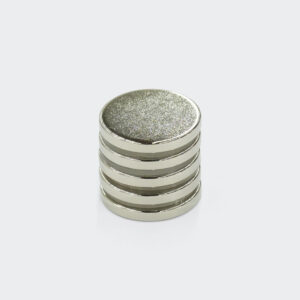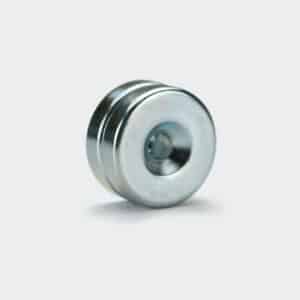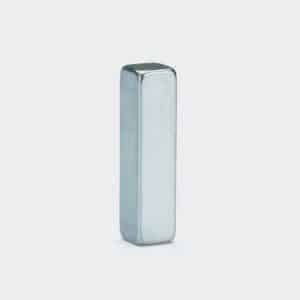
Every 0.1mm counts
In modern product design, vertical space is your biggest constraint.
Whether you’re building a haptic feedback engine, Hall effect sensor trigger.
Or magnetic latch for a foldable device, you’re fighting for every fraction of a millimeter.
Engineered for tight spaces
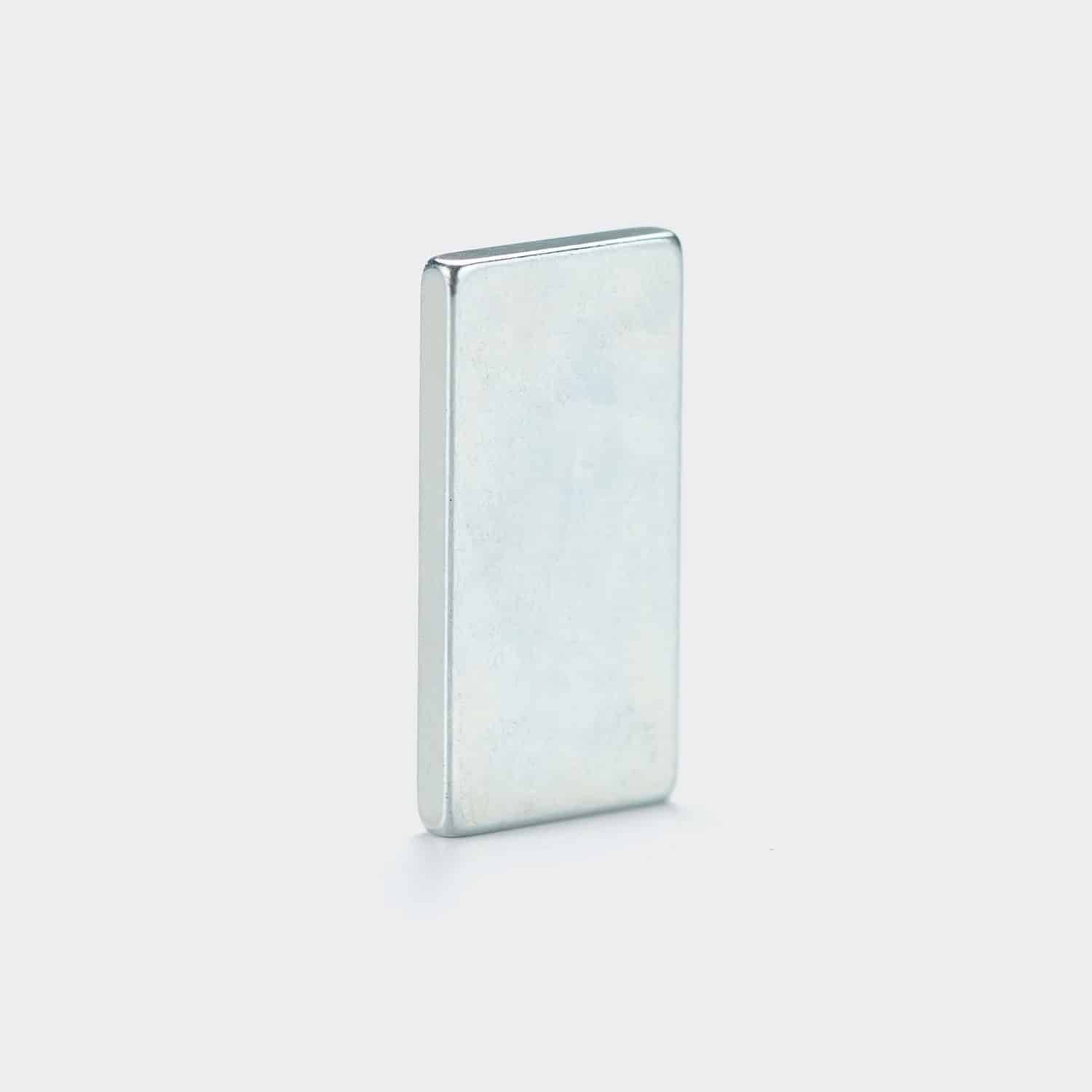
Our high-aspect-ratio neodymium plates solve the power-to-volume challenge.
Unlike standard magnets, these thin plates are specifically engineered to be embedded, glued, or laminated into zero-clearance housings.
The Engineering Logic: Designed for Integration
1. The “Bonding” Challenge (Adhesive Compatibility)
Thin plates are rarely press-fit; they are almost always glued.
The Problem:
– Standard Nickel coating is smooth and slick.
– Many industrial adhesives (like Loctite or 3M) struggle to grip it, leading to “drop-out” failures in the field.
Our Solution:
We offer specialized surface treatments to increase Surface Energy (Dyne Level).
– Epoxy Coating: Provides a textured “tooth” for glue to grab.
– Phosphating: A chemical passivation that bonds chemically with rubber over-molding.
3M Pre-Application:
– We can deliver plates with 3M 467MP (0.05mm thick) pre-applied.
– This turns the magnet into a “peel-and-stick” component to speed up your assembly line.
2. The “Sensor” Standard (Flux Uniformity)
Many thin plates are used as triggers for Hall Effect Sensors (e.g., laptop lids, flip phones).
The Risk:
– A cheap thin magnet often has “Waviness” (uneven thickness).
– This causes the magnetic field to fluctuate.
– It leads to sensor glitches (the device thinks it’s open when it’s closed).
Our Precision:
– We use Double-Disc Grinding to achieve a Parallelism of <0.02mm.
– This guarantees a stable, predictable magnetic field curve for your sensors.
3. Thermal Stability in Tight Spaces
Thin plates are often buried deep inside electronics where heat cannot escape.
The Advice:
– Standard N35 grade loses strength at 80°C.
– Inside a charging case or near a processor, temps can spike.
Recommendation:
– For embedded plates, we recommend N42SH (Super High Temp) or UH series.
– It ensures the magnet doesn’t lose its “grip” after months of thermal cycling.
Application Scenarios
Scenario A: The “Blind” Latch
– Application: Cosmetic compacts or Wireless Earbud cases.
– Challenge: The magnet must be hidden under plastic, but still snap shut with a satisfying “click.”
– Solution: N52 Grade Micro-Plate. The N52 grade compensates for the “Air Gap” created by the plastic housing.
Scenario B: The PCB Mount
– Application: A safety interlock on a medical device.
– Challenge: The magnet is Surface Mounted (SMT) or glued directly to a circuit board.
– Solution: Gold (Au) Plating. Excellent conductivity and solderability. It ensures no interference with sensitive electronics.
Ordering Guide: The “Stack-Up” Calculator
To quote this part, we need to understand your assembly stack-up.
1). Target Z-Height: What is the maximum thickness allowed in your design? (e.g., “We have a 1.2mm gap”).
2). The “Air Gap”: Will the magnet touch steel directly, or is it hidden behind plastic? (This determines if you need N35 or N52).
3). Fixation Method: Glue, Tape, or Pocket? (Determines the coating).
4). Operating Temp: Will this device get hot?