
Continuous magnetic flux along a linear path
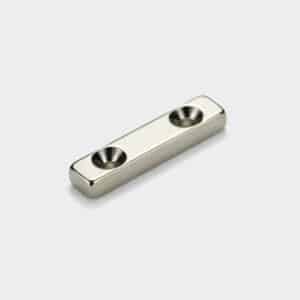
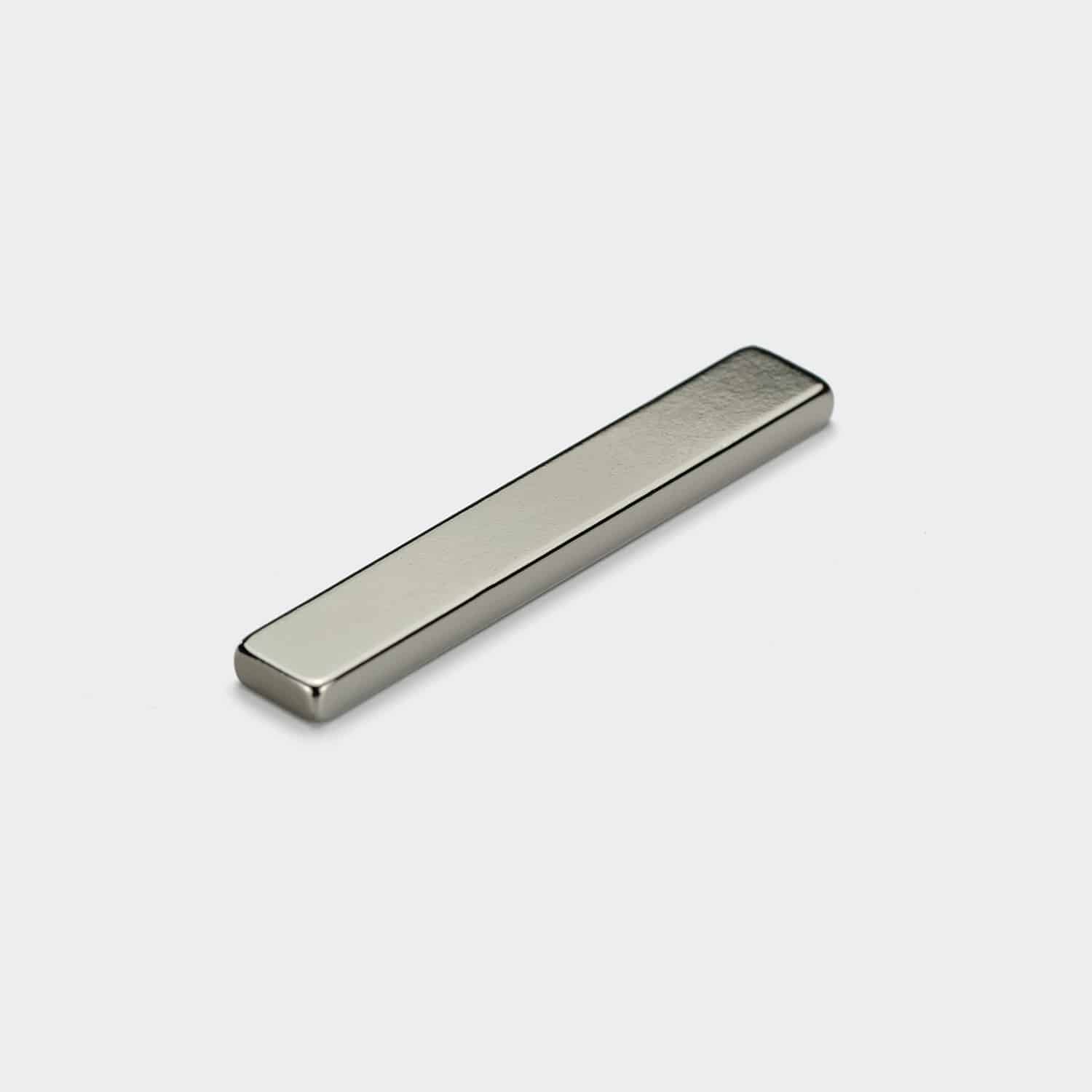
Custom neodymium thin bars have elongated rectangular shapes.
Their length significantly exceeds the width.
They can provide uniform magnetic fields along a straight line.
No gaps, no inconsistencies
Also called strip magnets or rails, these solid bars ensure smooth, uninterrupted magnetic flux.
Using a row of individual disc magnets creates hot spots and dead zones.
A single bar magnet delivers consistent performance across the entire length.
Critical for linear applications
This continuous field is essential for linear position sensing, hermetic sealing.
Seamless closures in consumer electronics can have variation in magnetic strength.
This could compromise functionality.
The Engineering Logic: Why Use a Continuous Bar?
Replacing multiple small magnets with one long bar solves specific design problems:
1. The “Continuous Seal” (Uniform Clamping):
The Problem:
Using 5 individual discs to hold a long flap (like a tablet cover or luxury box) creates gaps.
The flap bulges between the magnets.
The Solution:
A single Thin Bar provides distributed clamping force along the entire edge.
This creates a premium, airtight, and flush seal with no buckling.
2. Linear Sensing (Hall Effect):
The Problem:
Automation machinery often needs to detect the position of a moving part along a track.
The Solution:
A long bar magnet acts as a “magnetic rail.”
As the sensor moves along the bar, it reads a consistent field.
This allows for precise slide-switch detection or window/door security monitoring.
3. “Channel” Integration:
The Fit:
Thin bars are designed to slide into milled slots or aluminum C-channels.
This hides the magnet completely and protects it from impact.
Manufacturing Excellence: Controlling “The Banana Effect”
The Challenge: Camber (Bowing)
During the high-heat sintering process, long thin magnets naturally tend to warp or bow in the middle (like a banana).
If a magnet is bowed, it will crack when you try to force it into a straight machined slot.
Our Solution: Profile Grinding
We do not just slice; we grind.
We apply Profile Grinding to the long faces to ensure Straightness / Flatness tolerances of <0.05mm over the length.
We guarantee our bars will slide perfectly into your rigid channels without jamming or snapping.
Handling & Installation Advisory
A long thin bar is effectively a ceramic twig.
It snaps easily.
The “Two-Hand” Rule:
Never pick up a long bar magnet by one end.
The weight of the other end creates enough torque to snap it in the middle.
Always lift with two hands or slide it off the stack.
Installation:
We strongly recommend bonding these into a support channel (steel or plastic groove).
Do not use them as structural bridges.
Ideal Applications
Smart Covers: Spine magnets for attaching keyboards or covers to tablets.
Joinery: “Invisible” magnetic strips routed into the edges of wooden sliding doors.
Industrial Filtering: Separation bars used to pull metal debris out of liquid or grain flow.
Security: Alarm contacts for wide industrial gates.
Ordering Guide
To quote accurately, please specify:
1). Dimensions: Length x Width x Thickness.
2). Magnetization Direction:
– Through Thickness: (Most common for holding/clamping).
– Lateral: (Used for Halbach arrays or specific sensor setups).
3). Straightness Requirement:
– “Will this be pressed into a rigid slot?” (If yes, we will apply strict straightness QC).
4). Coating: Ni-Cu-Ni (Standard) or Epoxy (for outdoor seals).