
USP Class VI Biocompatible, Vacuum Deposited (CVD), Pinhole-Free
We supply Custom Neodymium Magnets finished with precise Parylene C Coating.
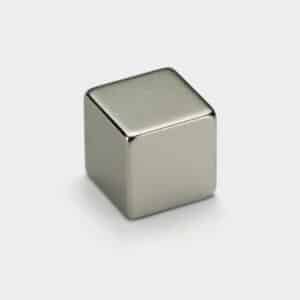
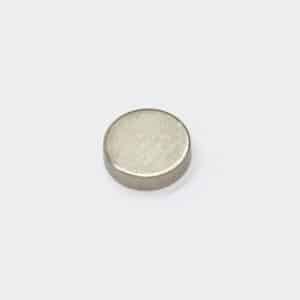
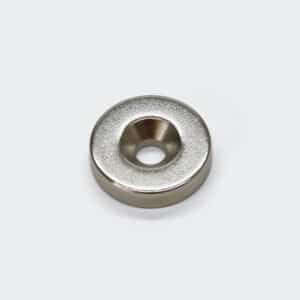
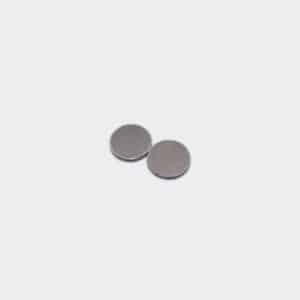
As shown in the product photo, Parylene has a distinct Matte Grey / Dull Silver appearance.
It is not a shiny metal plating.
It is a specialized polymer film.
Unlike Nickel or Epoxy (which are dipped or sprayed liquids), Parylene is applied via Chemical Vapor Deposition (CVD) in a vacuum chamber.
This creates a truly “Conformal Coating”.
It means it covers every microscopic peak and valley of the magnet with perfectly uniform thickness.
It is the gold standard for applications where contamination and corrosion are unacceptable.
For example, Medical Devices, Micro-Motors, and Fluid Handling systems.
Why Pay for Parylene?
Parylene is a premium process. Engineers specify it when failure is not an option.
1. The “Zero-Pinhole” Seal:
The Problem:
Nickel and Zinc platings are porous.
At a microscopic level, they have tiny holes.
And they allow moisture to eventually reach the iron core and cause corrosion.
The Solution:
Parylene gas penetrates every crevice and polymerizes into a continuous film.
It is completely pinhole-free.
This feature makes it impervious to moisture, sweat, and digestive fluids.
2. No “Dog-Boning” (Precision Fit):
The Problem:
Liquid coatings (Epoxy/Nickel) tend to pool at the corners of a magnet.
They make the edges thicker than the center (the “Dog-Bone” effect).
This ruins tight interference fits.
The Solution:
Parylene adds exactly the same thickness to the sharp corners as it does to the flat faces.
If you need a magnet to fit into a H7/g6 tolerance hole, Parylene is the only coating that maintains that precision.
3. Biocompatibility:
The Standard:
Our Parylene C coating meets USP Class VI standards.
The Benefit:
It is chemically inert and safe for short-term biological contact.
It is widely used in catheters, surgical tools, and hearing aids.
Because it prevents Nickel allergies and resists bacterial growth.
Durability Advisory: It is a Film, Not Armor
Parylene is a chemical shield, not a mechanical one.
1. Abrasion Warning:
The Limit:
Parylene is a polymer (plastic).
It has a low coefficient of friction, but it is soft.
The Advice:
Do not use Parylene magnets in high-impact latching where they slam against rough steel.
The film can be pierced or scratched, compromising the seal.
2. Thickness Control:
The Spec:
We typically apply Parylene at 10 – 20 microns.
The Capability:
Because it is vapor-deposited, we can dial in the thickness to within ±2 microns if required for your specific gap tolerance.
Ideal Applications
Medical Devices: Catheter steering magnets, endoscopic capsules, and hearing aid battery doors.
Hard Disk Drives: Clean-room magnets (Parylene generates zero dust/particles).
Micro-Motors: Rotors with extremely tight air gaps.
Fluid Sensors: Magnets submerged in fuel, water, or mild acids.
Ordering Guide: Precision Quotation
To provide an accurate quote for this batch process, please specify:
1). Dimensions: Shape and Size.
2). Application: “Is this a medical device?” (We can provide material certifications).
3). Coating Thickness: “Standard (10-15um) or Thick (20-25um)?”
4). Tolerances: “Is this being pressed into a precision hole?” (Parylene is ideal for this).