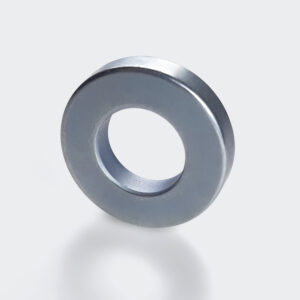
Superior Glue Bonding, Sacrificial Corrosion Protection
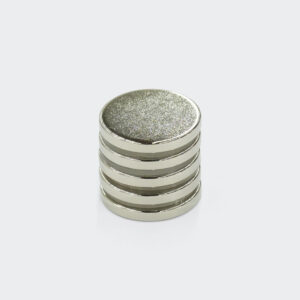
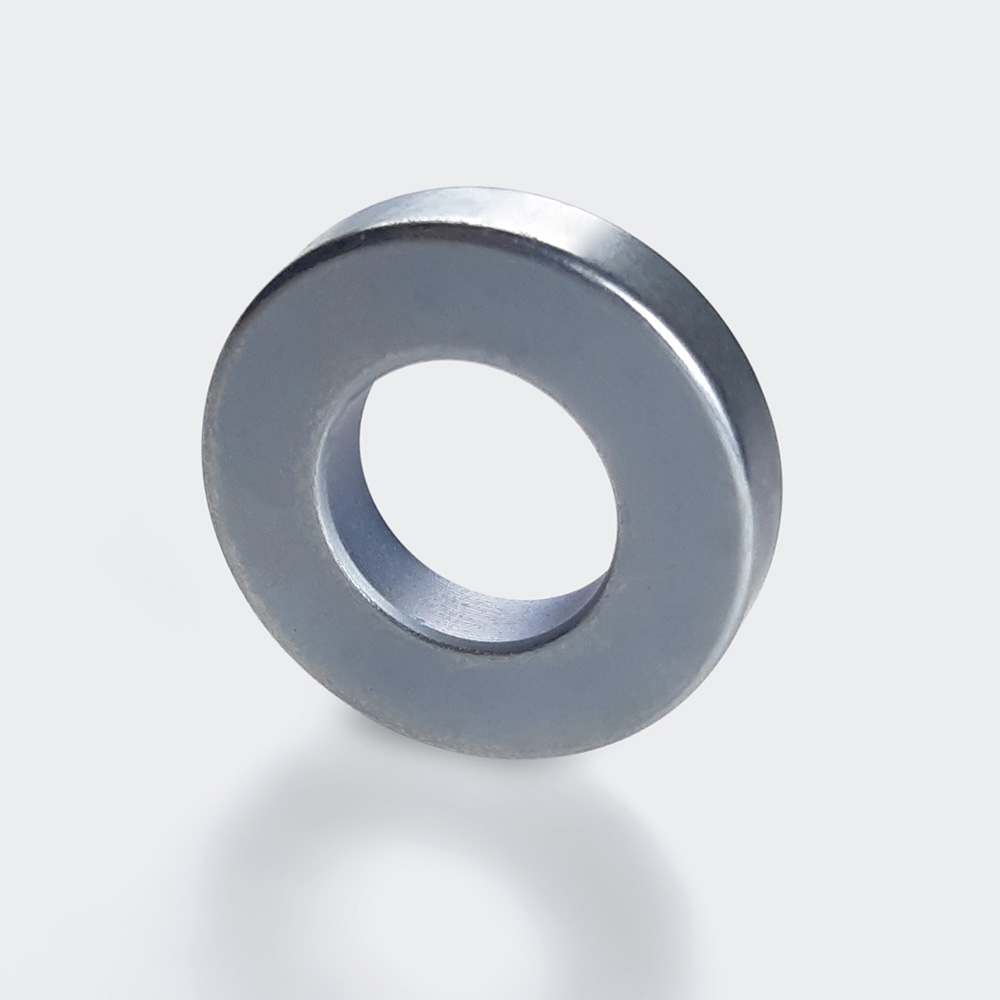
We supply Custom Neodymium Magnets with a functional Zinc (Zn) Plating.
You can recognize this plating by its Blue-White or Silver-Grey industrial finish.
Zinc is the preferred coating for high-volume manufacturing where the magnet is hidden inside a device.
Nickel (Ni-Cu-Ni) is smooth and slippery.
Meanwhile, Zinc plating offers a slightly textured surface chemistry.
This makes it the most suitable choice for applications requiring High-Strength Bonding.
Such as motor rotors, speaker drivers, and sensor housings.
Within those magnetic assemblies, the magnet must never detach from the substrate.
Why Choose Zinc over Nickel?
Nickel is pretty. Zinc is practical.
Here is why engineers specify Zinc:
1. The “Glue Grip” Advantage (Adhesion):
The Problem:
Nickel plating is extremely smooth and passive.
Industrial adhesives (Epoxy, Loctite, Cyanoacrylate) often struggle to “bite” into the surface.
This can lead to “drop-out” failures.
The Zinc Solution:
Zinc is more reactive and has a slightly rougher surface profile.
It creates a far superior chemical and mechanical bond with adhesives.
You may need to glue magnets into a steel channel or a plastic housing.
Zinc offers significantly higher Shear Strength.
2. Sacrificial Corrosion Protection:
The Chemistry:
Zinc acts as a Sacrificial Anode.
If the coating is scratched, the Zinc will oxidize (corrode) first.
And protect the iron in the magnet underneath.
The Benefit:
Nickel is a barrier coating; if it scratches, the magnet rusts instantly.
Zinc offers “self-healing” protection for minor scratches.
Make it more robust during rough assembly processes.
3. Cost & Tolerance:
The Benefit:
Zinc is a single-layer plating process (unlike the triple-layer Ni-Cu-Ni).
This makes it generally more Cost-Effective for high-volume runs.
The Fit:
The coating is thinner (~8-10 microns) than Nickel (~15-20 microns).
Allow for slightly tighter mechanical tolerances in precision assemblies.
Environmental Advisory: Humidity
Zinc is great, but it has one weakness.
The “White Rust” Factor:
The Warning:
In high-humidity environments, Zinc can develop a white powdery residue (“White Rust”) over time.
The Advice:
If your application is exposed to visible consumer contact or high humidity (e.g., a bathroom fixture), use Nickel or Epoxy.
Zinc is best suited for dry, internal, or oil-filled environments (like motors).
Ideal Applications
Loudspeakers: Magnets glued to the back plate (Zinc holds the glue better under vibration).
Electric Motors: Magnets bonded to the rotor or housing.
Magnetic Separators: Large blocks where cosmetics don’t matter, but cost does.
Whiteboard Magnets: Low-cost consumer magnets (encased in plastic).
Ordering Guide: Specifying Zinc
To quote these accurately, please confirm:
1). Dimensions: Shape and Size.
2). Cosmetic Expectation: “Is this a visible part?”
– If yes, we warn you that Zinc looks industrial, not jewelry-like.
3). Adhesive Process: “What glue are you using?”
– We can ensure the surface is clean and ready for bonding.
4). Quantity: Zinc is highly efficient for large batch production.