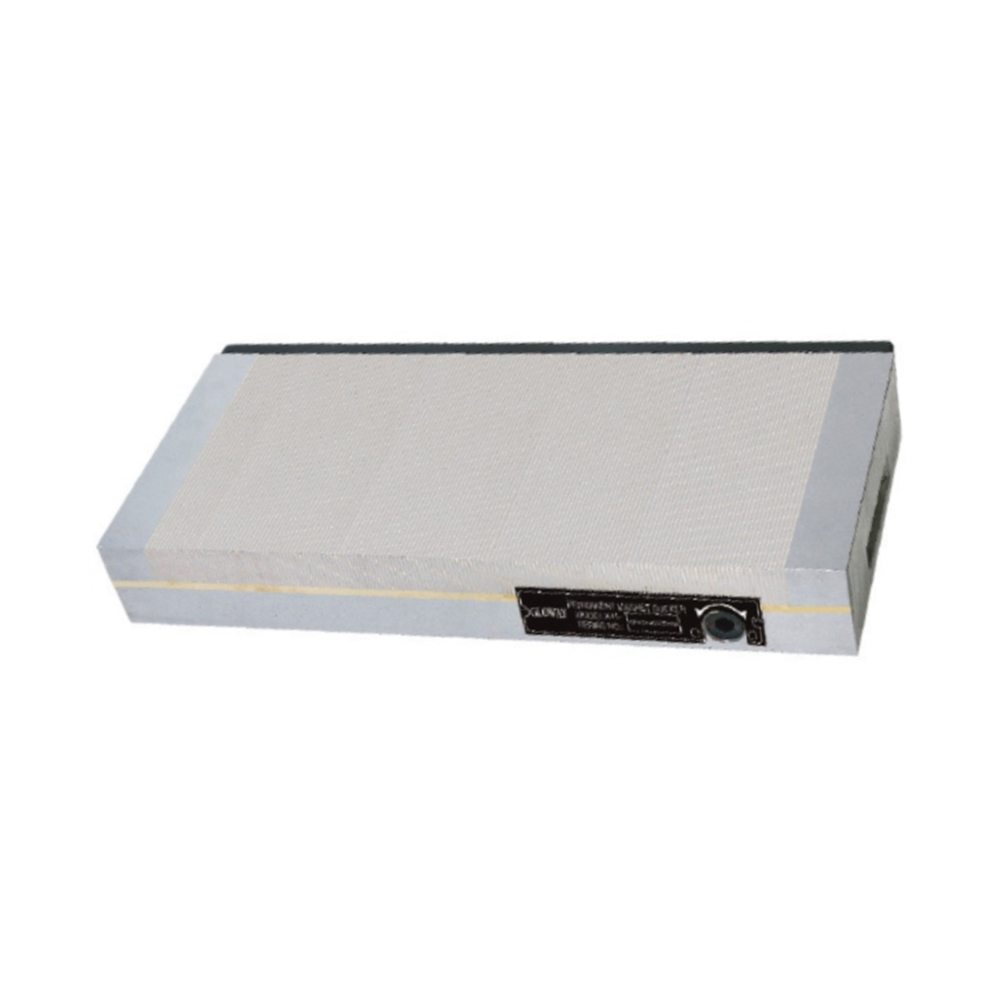
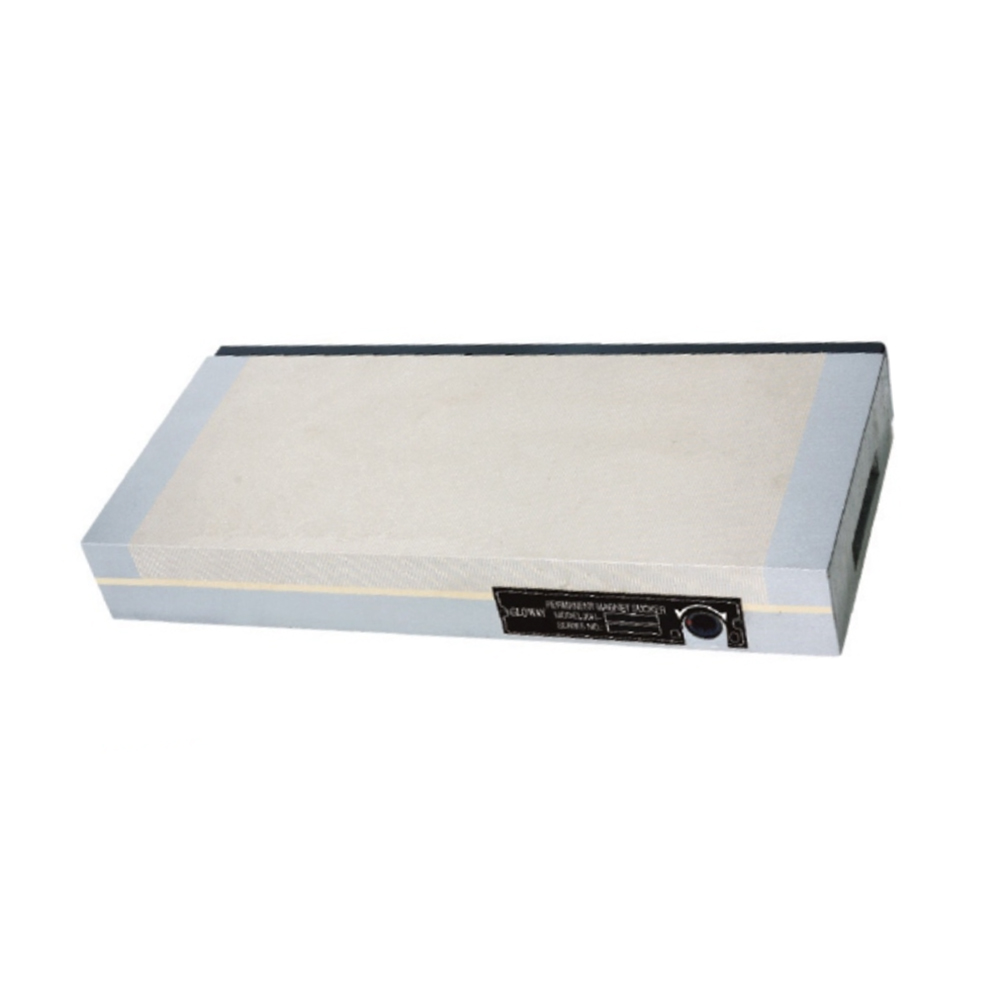
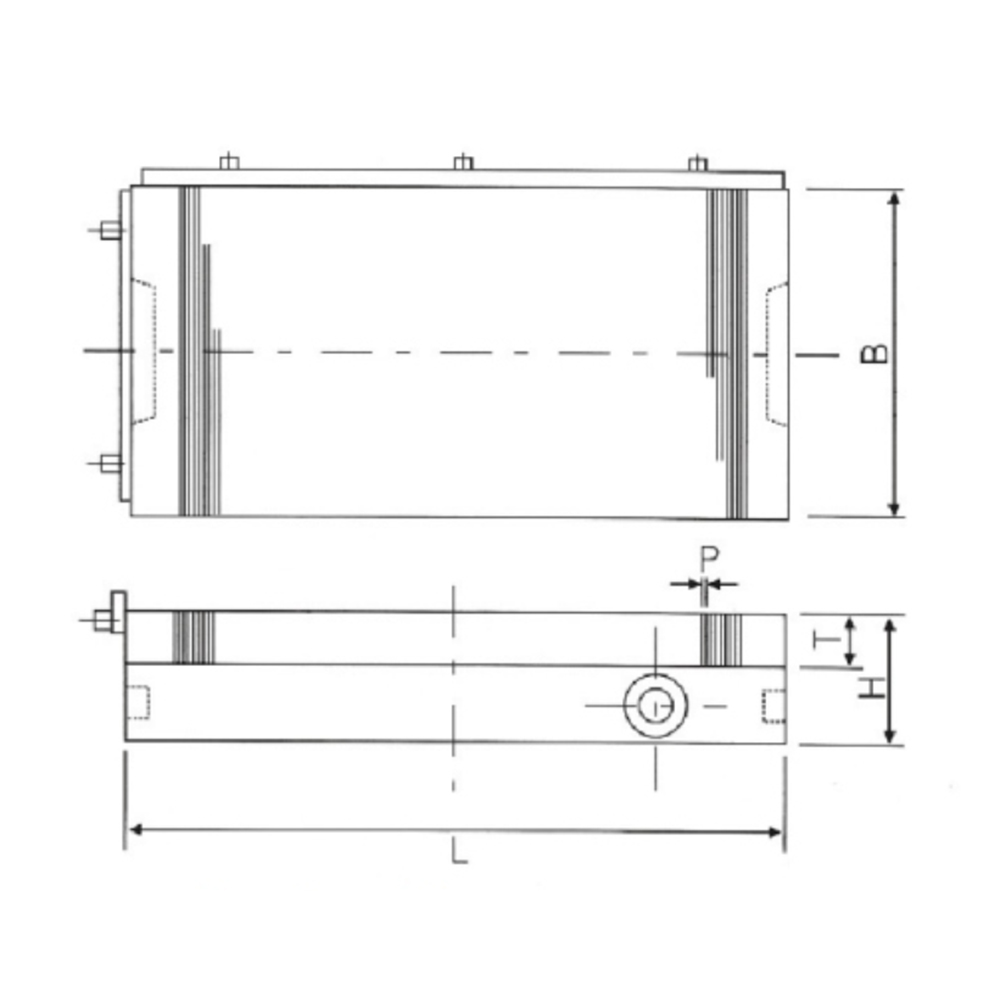


Series Overview: Precision Finishing
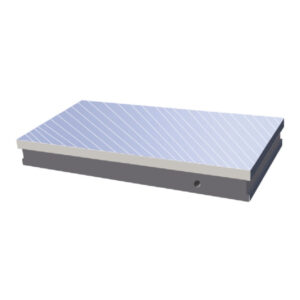
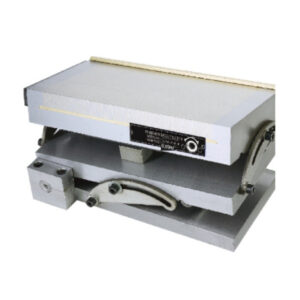
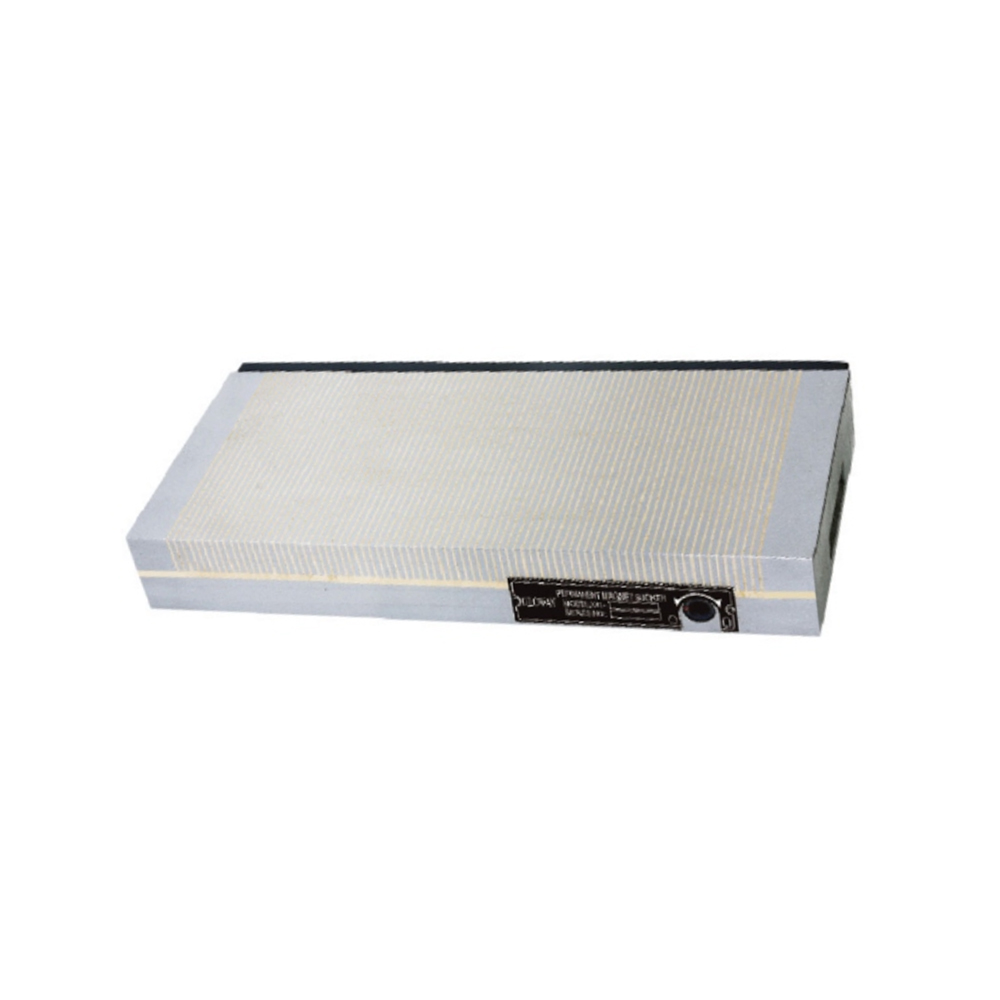
The PMCM Series is suitable for high-precision finishing operations.
It includes Surface Grinding and EDM (Electrical Discharge Machining).
Unlike heavy milling chucks, these units focus on holding delicate, thin, and small workpieces.
And they feature absolute flatness and minimal distortion.
The “Pitch” Advantage (Pole Spacing)
The defining feature of this series is the availability of different magnetic pole pitches.
It means the distance between the steel and brass laminations.
This allows you to match the chuck to your specific workpiece size:
Normal Pitch:
– P:3 mm Steel+1 mm Brass
– The standard all-rounder for general grinding of medium-sized workpieces.
Micro Pitch:
– P:1.5 mm Steel+0.5 mm Brass
– Increases magnetic contact points, ideal for smaller parts.
Super Fine Pitch:
– P:1.0 mm Steel+0.5 mm Brass
– The ultimate solution for extremely small or micro-thin components.
– Ensure they are held securely without bowing or warping.
Key Features
Liquid-Tight Construction:
They have a fully sealed structure.
It is suitable to operate submerged in dielectric fluid (for EDM).
Or under heavy coolant flow (for Grinding) without internal corrosion.
Low Residual Magnetism:
They can release parts easily after processing.
Simplify the cleaning of chips and swarf.
Solid Steel/Brass Top:
The top plate is a solid brazed lamination of steel and brass.
And offers excellent wear resistance and thermal stability.
Technical Insights
1. Understanding the “Wearing Limit” (Longevity)
A major advantage of the PMCM series is its service life.
The datasheet indicates a Pole Plate Wearing Limit of 5 mm.
What this means:
Over years of use, grinding chucks inevitably get scratched or lose flatness.
You can re-grind (skim) the top surface of this chuck repeatedly to restore perfect flatness.
Remove up to 5 mm of material total before the chuck needs replacing.
This guarantees a very long ROI.
2. Why “Magnetic Field Height” Matters
The spec sheet lists a magnetic field height of 8 mm.
In the world of grinding, low flux height is a feature, not a bug.
Benefit:
The magnetic force is concentrated strictly on the workpiece (the bottom 8 mm).
It does not project high up into the machine spindle.
This prevents grinding dust and swarf from being attracted to the grinding wheel.
Or the spindle bearings, protecting your machine from premature wear.
3. Choosing the Right Pitch for Thin Parts
If you are grinding a plate that is 2 mm thick, do not use the Normal Pitch (4 mm total spacing).
The magnetic flux will bridge too wide.
Fail to hold the part securely.
Rule of Thumb:
The workpiece thickness should ideally be greater than the pitch width.
For very thin precision shims or washers, always choose the Super Fine Pitch (1.5 mm total) model.
Ensure the magnetic loops close within the workpiece itself.
Standard Supply Package
1). 1x PMCM Magnetic Chuck: (Selected Pitch Model).
2). 1x Allen Key / Hex Handle: For turning the magnetic mechanism On/Off (90∘ turn).
3). Set of Stopper Blocks: Adjustable back and side rails to physically locate the part during grinding.
4). Clamping Hardware: T-nuts and bolts for securing the chuck to the machine table slots.
Comparison Guide (Quick Select)
Model P (3+1):
Best for general workshops doing mixed grinding work.
Max Force: ∼140 N/cm2.
Model P (1.5+0.5):
Best for mold making and tool & die components.
Max Force: ∼120 N/cm2.
Model P (1.0+0.5):
Essential for watchmaking, electronics, or micro-machining.
Max Force: ∼100 N/cm2.
Note:
As the pitch gets finer, the holding force per square cm drops slightly.
But the holding stability on small parts increases dramatically.