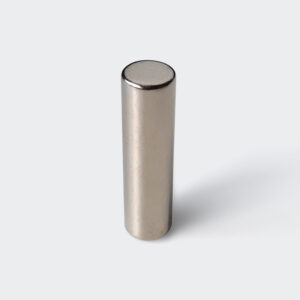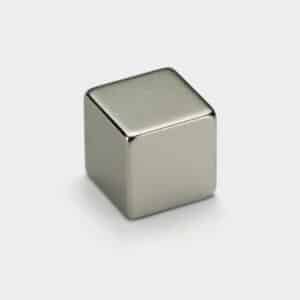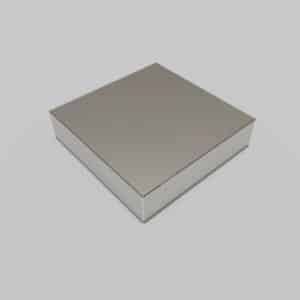
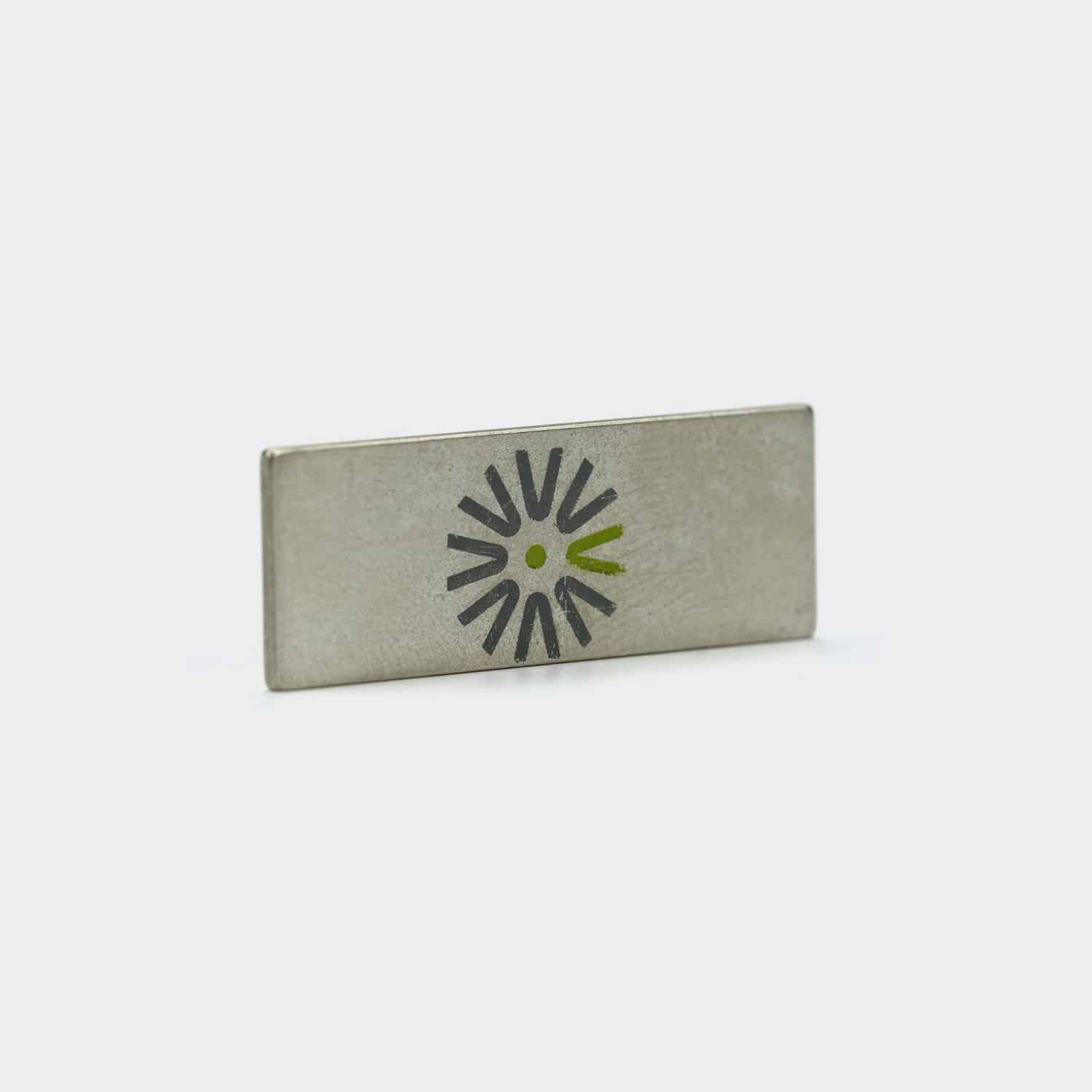

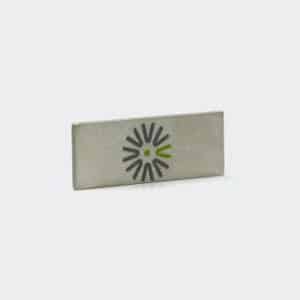
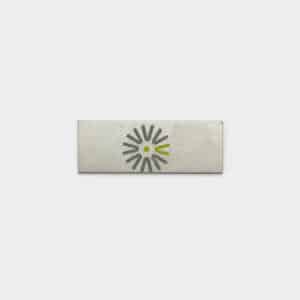
We supply custom Neodymium block magnets with laser-engraved markings.
They are used for polarity identification, part numbering, traceability, or branding.
Laser marking can add:
– Text (polarity indicators like “N” or “S”, part numbers, batch codes)
– Symbols (arrows, logos)
– Or data matrix/QR codes directly onto the magnet surface.
This is useful when multiple similar magnets are used in assemblies.
In such cases, visual polarity identification or traceability is required.
Marking is typically performed after sintering and coating.
The laser ablates the nickel plating and creates a shallow engraved mark (typically 0.01mm to 0.05mm deep).
The exposed neodymium substrate at the mark may be more vulnerable to corrosion.
This is particularly true in humid or wet environments, since the protective coating is interrupted.
For improved corrosion resistance, markings can be epoxy-filled or top-coated after engraving.
Even though this may reduce contrast.
Alternatively, marking can be done on one designated surface that will be protected or non-exposed in the final assembly.
Mark size and complexity are limited by magnet size.
QR codes or data matrices require minimum dimensions (typically 5mm × 5mm or larger) to remain scannable.
Fine text on magnets smaller than 10mm may have limited readability.
Laser marking adds per-piece cost and processing time.
For large volumes or low-value magnets, you may need more cost-effective alternatives.
Examples can be printed labels, color-coded coatings, or mechanical notches.
The Engineering Logic: Why Laser Mark?
Sell the “Solution,” not just the laser.
1. “Poka-Yoke” (Mistake-Proofing) Assembly:
The Problem:
Installing a magnet backward (South facing out instead of North) can ruin a motor or sensor assembly.
The Solution:
We laser mark a dot or an “N” on the specific pole face.
The Benefit:
Assembly line workers have a visual guide, reducing rejection rates to near zero.
2. Supply Chain Traceability:
The Problem:
In medical or automotive industries, you must know exactly which batch a magnet came from years later.
The Solution:
We can engrave Serial Numbers, Lot Codes, or Data Matrix/QR Codes.
The Benefit:
Full traceability for ISO/IATF compliance.
Coating Integrity
This is the most important consideration.
You must assure them you won’t ruin the rust protection.
Surface Annealing vs. Deep Engraving:
Neodymium corrodes easily.
If a laser cuts too deep, it breaks the Nickel plating and causes rust.
Our Process: We utilize Laser Annealing (Surface Marking) technology.
How it works:
We adjust the laser frequency to simply change the color of the Nickel plating.
This creates a dark grey/black mark without removing the material.
The Result:
A clear, permanent mark.
It leaves the protective Nickel-Copper-Nickel barrier 100% intact and corrosion-resistant.
Magnet Specifications
– Shapes: Blocks, Discs, Rings, or Irregular shapes.
– Dimensions: Custom. (We can mark even micro-magnets, provided there is surface area for the text).
– Tolerance: The magnet dimensions remain unchanged by the marking process.
Applications
Electric Motors: Marking the rotor magnets with batch numbers for balancing and warranty tracking.
Consumer Electronics: Branding a visible magnetic connector with a company logo.
Sensor Assemblies: Marking “N” or “S” to ensure the Hall Effect sensor triggers correctly.
Educational Kits: Labelling magnets for classroom use.
Ordering Guide: What We Need to Quote
To add laser marking to your order, please specify:
1). The Magnet: Dimensions and Grade.
2). The Content: What are we marking? (e.g., “N”, “12345”, or “Logo”).
Note: For logos, we need a Vector File (DXF, AI, SVG).
3). The Location: “Center of the marked face” or “Bottom Right Corner”?
4). The Rule: “Mark the North Pole” or “Mark the South Pole”?