


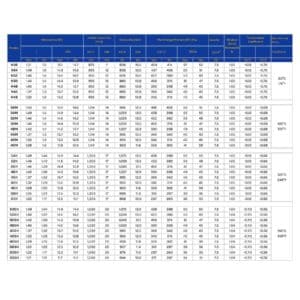
10 Poles (5 Pole Pairs), High-Torque Sintered Neo
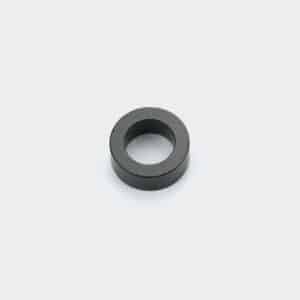
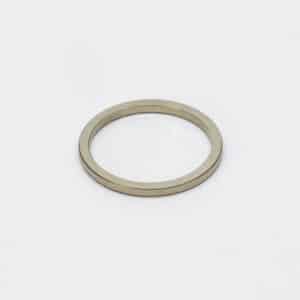
We supply Custom Sintered Neodymium Rings with specialized 10-Pole Magnetization.
Standard rings have a single North and South face.
But we can offer ring magnets feature 5 alternating North/South pole pairs.
Distributed around the circumference.
This custom magnet design allows motor and sensor engineers to replace complex “Segmented Rotors” with a Single Solid Ring.
This reduces assembly time, improves rotor balance.
And eliminates the risk of individual segments detaching at high RPM.
Why 10 Poles?
Why choose a multi-pole ring instead of standard segments?
1. Assembly Efficiency (The “Glue” Killer):
The Old Way:
Gluing 10 separate arc magnets onto a hub requires precision jigs, messy adhesives, and hours of curing time.
The Multi-Pole Way:
You press-fit one 10-pole ring onto the shaft.
You save 90% of your assembly labor costs.
2. Rotational Balance:
The Problem:
If you glue 10 segments and one is slightly heavier or glued 0.1mm off-center, the motor will vibrate at high speeds.
The Solution:
A solid sintered ring is perfectly concentric and balanced by nature.
It ensures smooth, vibration-free rotation at high RPMs.
3. Sensor Resolution:
The Application:
Magnetic Encoders / Speed Sensors.
The Logic:
A standard 2-pole magnet gives 1 pulse per revolution.
A 10-pole ring gives 5 pulses per revolution.
This provides much higher resolution data for speed and position sensing.
Magnetization Orientation: Two Styles
Multi-pole rings can be magnetized in two different directions depending on your device.
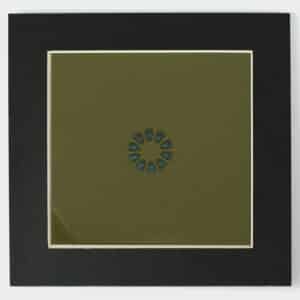
1. Multi-Pole on OD (Outer Diameter):
Configuration:
The poles are located on the curved outside surface (N-S-N-S…).
Use Case:
Internal Rotors (where the coils are around the outside) or Speed Sensors.
2. Multi-Pole Axial (On the Face):
Configuration:
The poles are sectors on the flat circular face (like a sliced pizza).
Use Case:
Pancake Motors, Axial Flux Generators, or Magnetic Couplings.
Manufacturing Advisory: Sintered vs. Bonded
This is a common confusion in the market.
Bonded Neo (Plastic-like):
It is easy to make multi-pole, but it is weak (Low power).
Sintered Neo (Metal):
It is extremely strong (N52).
But difficult to magnetize with multiple poles.
Our Capability:
We specialize in Sintered Multi-Pole.
We build custom copper fixtures to blast the 10-pole pattern into solid, high-power Neodymium.
This gives you the convenience of a ring with the power of N50/N52.
Ideal Applications
Brushless Motors (BLDC): High-torque rotors for drones and power tools.
Magnetic Encoders: Position sensing for robotics arms.
Magnetic Couplings: Non-contact torque transfer (10 poles grip better than 2).
Stepper Motors: Precision stepping actuators.
Ordering Guide: The Fixture Requirement
Multi-pole magnetization requires a custom-built fixture (coil).
1). Dimensions: OD x ID x Thickness.
2). Pole Type: “Is this 10 Poles on the OD (Radial-ish) or 10 Poles on the Flat Face (Axial)?”
3). Skew: “Do the poles need to be skewed (angled) to reduce motor cogging?” (Advanced).
4). Quantity:
– Because we must build a custom magnetizing fixture, there is usually a one-time tooling fee.
– This makes 10-pole rings best suited for production runs of 500+ pieces, rather than single prototypes.

Reviews
There are no reviews yet.