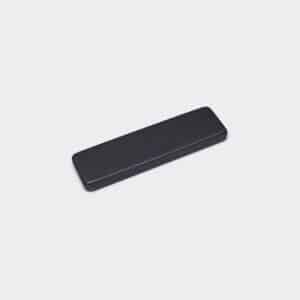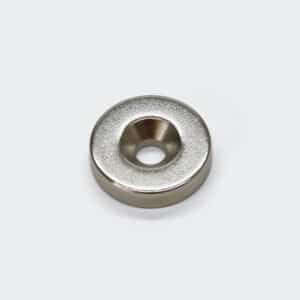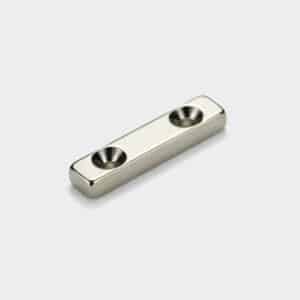


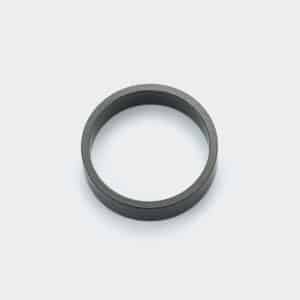
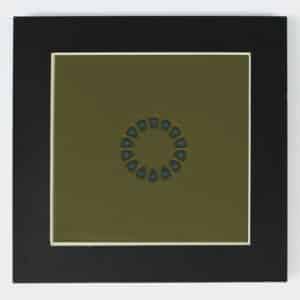
We supply custom 14-Pole Neodymium Magnet Rings (7 North / 7 South) as per your specifications.
They are common magnetic components for high-torque density applications.
Generally, standard ring magnets use binary pole counts (4, 8, 16).
But 14-Pole magnets are the industry standard for 12S14P Brushless Motors (12-Slot Stator, 14-Pole Rotor).
This specific magnetic geometry reduces cogging torque while maximizing thrust and efficiency.
We can offer the precise polarity pattern required to drive your high-performance actuators.
No matter you require a monolithic Bonded Ring for a small gimbal motor.
Or a Sintered Segmented Assembly for a heavy-lift drone.
The Engineering Logic: The “12S14P” Connection
Why 14 Poles?
The 14-pole rotor is rarely used for sensors; it is a Motor Topology choice.
The Application:
– Paired with a 12-Slot Stator (12 coils).
The Benefit:
– This combination creates a “Fractional Slot Concentrated Winding” motor.
– In plain English, it produces High Torque at Low RPMs with very low vibration.
Our Expertise:
– We ensure the pole transitions are sharp and equally spaced (360∘/14=25.7∘ per pole).
– This will you help maintain motor balance and efficiency.
Construction Options: Ring vs. Segments
A solid 14-pole sintered ring can be expensive to tool.
You can consider alternatives if costs are important for your applications.
1. Bonded Neodymium Rings (Monolithic):
Best For: Camera Gimbals, Small Fans, Lidar Motors.
Pros: Seamless ring, excellent waveform, lower cost for high volume.
Cons: Lower magnetic strength (not for heavy lifting).
2. Segmented Assembly (The “Rotor” Solution):
Best For: Heavy-Lift Drones, Robotics, E-Skateboards.
The Reality: Making a large solid sintered 14-pole ring is difficult.
Our Solution:
– We typically supply a “Matched Set” of 14 Arc Segments (7N / 7S).
– Or glue them into a steel ring for you.
– This allows you to use N52 or N45SH grades for maximum power (impossible with bonded rings).
Magnetization Orientation
Radial (Inner Rotor): Poles are on the OD. (The motor spins inside the stator).
Radial (Outer Rotor): Poles are on the ID. (The standard “Outrunner” motor for drones).
Axial: Available upon request, but rare for 14-pole configurations.
Surface Coatings
Black Epoxy: The #1 choice for 14-pole motor magnets.
– It withstands the heat inside a motor and bonds aggressively with structural adhesives.
– This ensures the magnets don’t fly off at 10,000 RPM.
Parylene:
– For waterproof/submersible drone motors.
Nickel:
– Standard, but requires careful surface prep before gluing.
Applications
UAV / Drones: Propulsion motors (Outrunners).
Camera Stabilizers: Gimbal motors (requiring smooth, cog-free rotation).
Robotics: Joint actuators.
Marine: Thrusters for ROVs (using epoxy-coated 14-pole arrays).
Ordering Guide: What We Need
To quote this, we need to know your “Motor Architecture”:
1). Dimensions: OD x ID x Thickness (or Length).
2). Configuration: Do you need a Solid Ring (Bonded/Sintered) or 14 Separate Arcs?
3). Grade: Do you need High-Temp resistance (e.g., 150°C)?
4). Application: “Is this for a 12-Slot Stator?” (This confirms the application).