
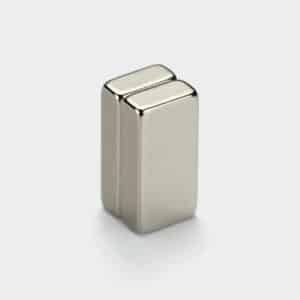
Standard Neodymium magnets (N-Series) begin to lose permanent magnetic strength at just 80°C.
We supply Custom “H” (High Coercivity) Series Magnets.
They are formulated with heavy rare-earth elements (Dysprosium/Terbium).
So they can resist demagnetization at higher temperatures.
These magnets are common for Brushless DC (BLDC) motors, automotive sensors, and industrial generators.
Because they are suitable for operational environments up to 120°C.
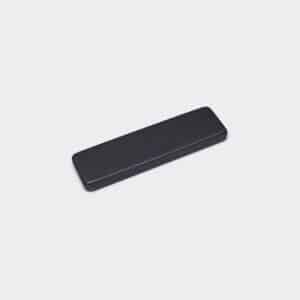
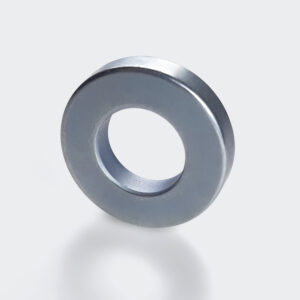
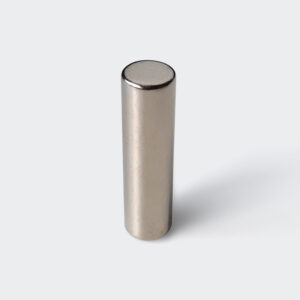
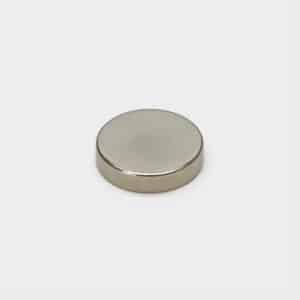
We provide custom shapes – including regular shapes and arcs, segments, and bread-loafs.
Will manufacture them to maintain their flux density when the heat rises.
Why “H” Grade?
The most common mistake engineers make is choosing N52 for a hot application.
They think “Stronger is Better.”
In heat, this is false.
1. Preventing Irreversible Demagnetization:
The Science:
– If you heat a standard N52 magnet to 100°C, it will lose a significant portion of its strength.
– It will not recover when it cools down.
The H Advantage:
– An H-Grade magnet (e.g., 35H or 42H) has a higher Intrinsic Coercivity (Hci).
– It effectively “locks” the magnetic domains in place.
– This feature allows the magnet to perform at 120°C and return to full strength when cooled.
2. The “N52 vs. 35H” Paradox:
The Reality:
– At Room Temperature (20°C), an N52 magnet is stronger than a 35H magnet.
The Crossover:
– However, at 100°C, the N52 magnet plunges in performance.
– Meanwhile, the 35H remains stable.
– Above 80°C, an H-grade magnet is actually stronger than an N52 magnet.
3. Shape Matters (The Pc Value):
The Risk:
Thin magnets (low Permeance Coefficient) are much more susceptible to heat damage than thick blocks.
Our Expertise:
If you are designing a very thin magnet for a hot environment, we may recommend upgrading from H to SH (150°C).
A higher grade provides an extra safety margin against demagnetization.
Manufacturing Capabilities
Heat-resistant magnets are often used in aggressive environments.
The finish is critical.
Custom Shapes:
Motor Arcs, Bread-loafs, Skewed Segments, and complex trapezoids (Wire EDM cut).
Coating Selection:
Phosphating / Passivation:
– Recommended if the magnet will be glued or over-molded (better adhesion than Nickel).
Nickel (Ni-Cu-Ni):
– Standard corrosion protection.
Warning:
– Avoid standard Epoxy if temps exceed 120°C.
– The coating itself may degrade before the magnet does.
Ideal Applications
Electric Motors: Rotors for Brushless DC motors, Stepper motors, and Servo motors.
Automotive: Under-the-hood sensors (Position, Speed, ABS) where engine heat is a factor.
Industrial Automation: Magnetic grippers on machinery that generates friction heat.
Power Tools: High-RPM drill motors.
Ordering Guide: The “Thermal Profile”
To ensure we supply the correct grade, we need to know the physics of your application.
Please provide:
1). Dimensions & Shape: (Drawings are preferred for motor arcs).
2). Peak Temperature: “What is the absolute maximum spike temperature?” (e.g., “Runs at 100°C, spikes to 115°C”).
3). Mechanical Stress: “Is this a high-speed rotor?” (We may need to discuss laminating the magnets to reduce eddy currents).
4). Grade Goal: “Do you need 42H, or are you open to suggestions based on the temp?”